Proper spacing is one of the most overlooked yet powerful techniques in vegetable gardening. Many gardeners focus on fertilizers, watering schedules, and pest control but forget that how far apart plants grow can directly determine their yield. Spacing vegetables for better yield improves plant health, reduces disease, and ensures every plant gets the resources it needs to thrive.
In this comprehensive guide, you’ll learn why spacing matters, how improper spacing affects yield, recommended spacing for common vegetables, and practical tips to maximize production in any garden size.

How Overcrowding Reduces Vegetable Yield
Overcrowding is one of the most common gardening mistakes, especially for beginners. While it may seem efficient to plant more vegetables in a small space, it often leads to disappointing results.
Problems Caused by Poor Spacing
- Plants grow tall and weak as they stretch for light
- Roots compete for limited nutrients and water
- Increased humidity encourages pests and diseases
- Vegetables remain small or fail to mature
- Higher chance of rot and fungal infections
In contrast, spacing vegetables for better yield ensures each plant has enough room to develop fully, leading to fewer losses and higher-quality produce.
Understanding Plant Spacing Requirements
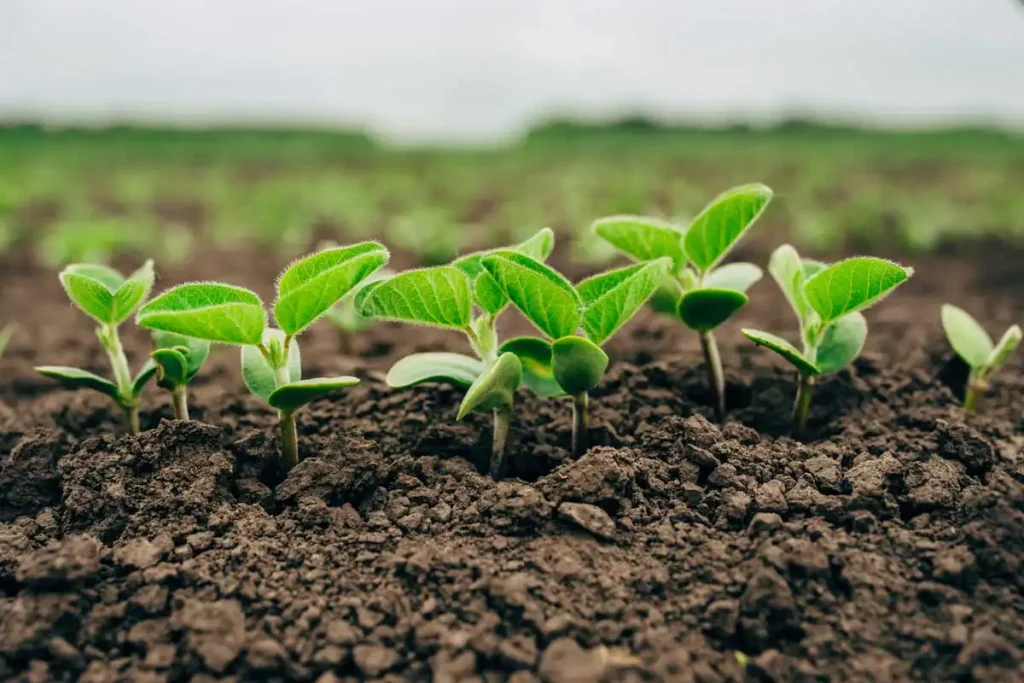
Each vegetable has unique spacing needs based on its growth habit, root system, and leaf spread. Some plants, like lettuce, grow compactly, while others, like pumpkins, need extensive space.
Factors That Affect Vegetable Spacing
- Plant size at maturity
- Root depth and spread
- Growth pattern (bush vs. vine)
- Climate and airflow needs
- Soil fertility
Ignoring these factors can limit yield even if watering and fertilization are perfect.
Recommended Spacing for Common Vegetables
Below are general spacing guidelines to help you plan your garden efficiently.
Leafy Vegetables
- Lettuce: 8–12 inches apart
- Spinach: 6–8 inches apart
- Kale: 12–18 inches apart

Root Vegetables
- Carrots: 2–3 inches apart
- Radishes: 2 inches apart
- Beets: 3–4 inches apart
Fruiting Vegetables
- Tomatoes: 18–24 inches apart
- Peppers: 12–18 inches apart
- Eggplant: 18–24 inches apart
Vine Crops
- Cucumbers: 12–18 inches apart (trellised)
- Squash: 24–36 inches apart
- Pumpkins: 36–60 inches apart

Following these spacing rules supports optimal growth and maximizes harvest potential.
Spacing Vegetables in Small Gardens
Limited space doesn’t mean limited yield. With smart planning, spacing vegetables for better yield is possible even in small gardens or containers.
Tips for Small-Space Gardening
- Use vertical gardening for cucumbers and beans
- Grow compact or dwarf vegetable varieties
- Practice square-foot gardening techniques
- Avoid overcrowding containers
- Prioritize high-yield crops
Proper spacing in small gardens ensures efficient use of space without sacrificing plant health.
Row Spacing vs. Plant Spacing
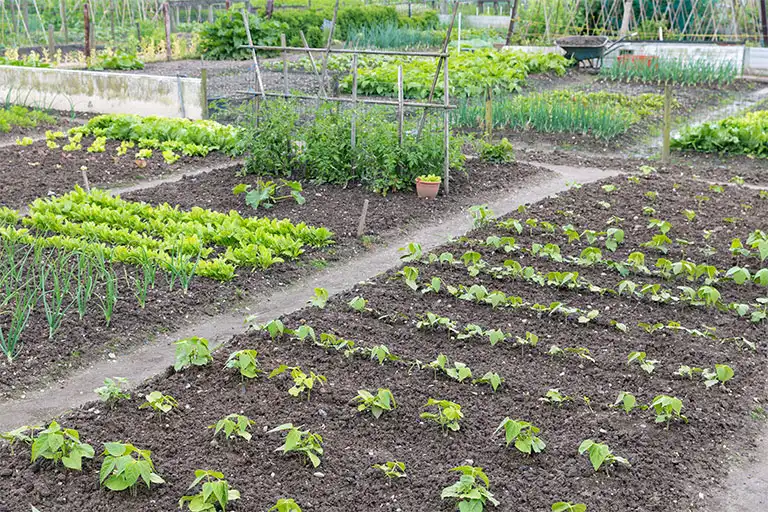
Many gardeners confuse row spacing with plant spacing. Both are equally important.
- Plant spacing: Distance between individual plants
- Row spacing: Distance between rows to allow airflow and access
For example, tomatoes may need 18 inches between plants and 3 feet between rows. Ignoring row spacing can reduce airflow and increase disease risk.
Common Mistakes in Vegetable Spacing
Avoiding these mistakes can significantly improve your yield:
- Planting seedlings too close
- Not thinning seedlings
- Ignoring mature plant size
- Using incorrect spacing for containers
- Overcrowding raised beds
Correcting these errors leads to healthier plants and more consistent harvests.
Troubleshooting Table: Vegetable Spacing Problems and Solutions
| Problem | Likely Cause | Solution |
|---|---|---|
| Small vegetables | Overcrowding | Thin plants and increase spacing |
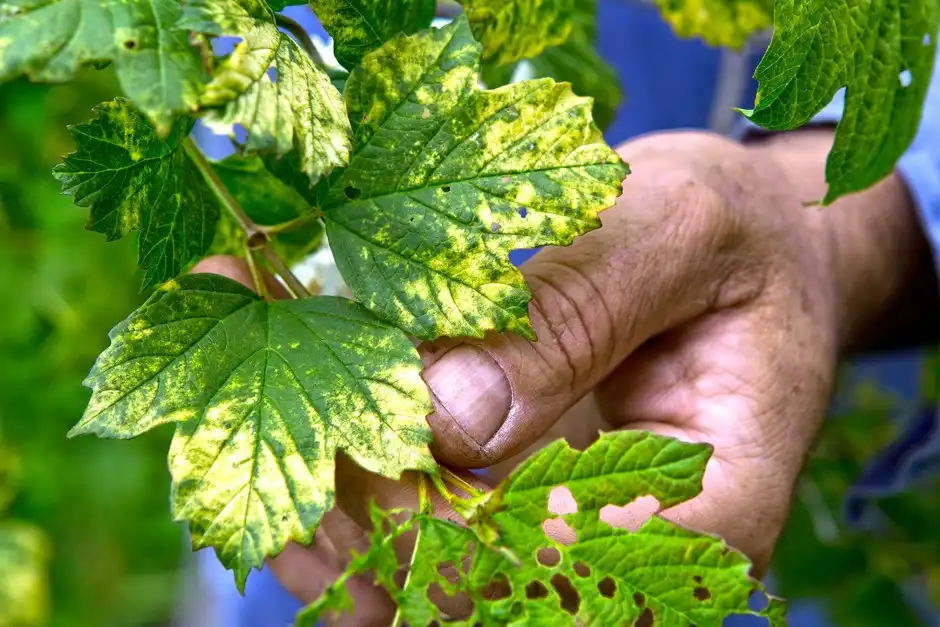
| Yellow leaves | Nutrient competition | Improve spacing and fertilize |
| Fungal diseases | Poor airflow | Increase distance between plants |
| Weak plant stems | Too little sunlight | Replant with proper spacing |
| Poor fruit set | Stress from competition | Follow recommended spacing |
This troubleshooting table helps quickly identify spacing-related issues and correct them before yield is affected.
How Spacing Improves Soil Health
Spacing vegetables correctly also benefits the soil. Well-spaced plants reduce nutrient depletion and prevent soil compaction. Healthy soil supports beneficial microbes, which improve nutrient availability and plant growth.
Over time, proper spacing contributes to a more sustainable and productive garden ecosystem.
Final Thoughts on Spacing Vegetables for Better Yield
Spacing vegetables for better yield is a simple but powerful gardening practice. By giving plants enough room to grow, you reduce competition, improve airflow, and encourage stronger growth. Whether you garden in raised beds, containers, or large plots, correct spacing leads to healthier plants and bigger harvests.
Focus on understanding each vegetable’s needs, avoid overcrowding, and use spacing as a tool to maximize productivity. With the right spacing strategy, your vegetable garden can reach its full potential.