Croton plants (Codiaeum variegatum) are prized for their vibrant, multicolored foliage, making them a stunning addition to any indoor or outdoor space. Propagating crotons is a rewarding way to expand your collection or share these eye-catching plants with friends. The most common method for propagating crotons is through stem cuttings, though they can also be propagated by air layering or seeds. In this blog, we’ll focus on the stem cutting method, as it’s the easiest and most reliable for home gardeners. Follow these steps for croton plant propagation and keep its colorful leaves thriving.
Croton Plant Propagation
Propagating crotons allows you to:
- Create new plants for free to decorate your home or garden.
- Rejuvenate leggy or overgrown plants by trimming and propagating healthy sections.
- Share your favorite croton varieties with others.
- Replace plants that may be struggling or damaged.
Best Time to Propagate Crotons
The ideal time to propagate croton plants is during the spring or early summer when the plant is actively growing. Warm temperatures and longer daylight hours promote faster root development. Avoid propagating in winter, as cooler temperatures and reduced light can slow or prevent rooting.
Materials You’ll Need
- Healthy croton plant
- Clean, sharp pruning shears or scissors
- Small pot with drainage holes
- Well-draining potting mix (e.g., a mix of potting soil, perlite, and sand)
- Rooting hormone (optional but recommended)
- Clear plastic bag or propagation dome
- Spray bottle for misting
- Gloves (to protect your hands from the plant’s irritating sap)
- Rubbing alcohol (to sterilize tools)
Step-by-Step Guide to Propagating Croton Plants
1. Choose a Healthy Stem
Select a healthy, mature stem from your croton plant that is 4–6 inches long and has at least 3–5 leaves. Look for a stem that’s firm, green, and free from pests or disease. Avoid stems that are too young (soft and flexible) or too woody, as they may not root as easily.
2. Take the Cutting
- Wear gloves to protect your skin from the croton’s milky sap, which can be irritating.
- Sterilize your pruning shears or scissors with rubbing alcohol to prevent the spread of disease.
- Cut the stem just below a node (the point where leaves attach to the stem) at a 45-degree angle. Nodes are critical because roots will grow from this area.
3. Prepare the Cutting
- Remove the lower leaves, leaving 2–3 leaves at the top to reduce water loss and focus energy on root growth.
- If desired, dip the cut end of the stem in rooting hormone powder or gel to encourage faster root development. Tap off any excess.
4. Plant the Cutting
- Fill a small pot with a well-draining potting mix. A blend of equal parts potting soil, perlite, and sand works well.
- Make a small hole in the soil with a pencil or your finger.
- Insert the cut end of the stem into the hole, about 1–2 inches deep, and gently firm the soil around it to hold it in place.
- Water the soil lightly to settle it, ensuring it’s moist but not soggy.
5. Create a Humid Environment
- Crotons root best in high humidity. Cover the pot with a clear plastic bag or place it under a propagation dome to trap moisture. Ensure the plastic doesn’t touch the leaves to prevent rot.
- Place the pot in a warm, bright location with indirect sunlight. Avoid direct sun, which can scorch the cutting.
- Mist the cutting lightly every few days to maintain humidity, and check the soil to ensure it stays slightly moist.
6. Care for the Cutting
- Keep the cutting in a warm environment (70–80°F or 21–27°C) to promote rooting.
- Check for root development after 4–6 weeks by gently tugging on the stem. If it resists, roots are forming.
- Be patient—crotons can take 6–8 weeks to develop strong roots.
7. Transplant the Rooted Cutting
- Once the cutting has developed a healthy root system (typically 2–3 inches long), remove the plastic bag or dome and gradually acclimate the plant to normal humidity levels.
- Transplant the rooted cutting into a slightly larger pot with the same well-draining potting mix.
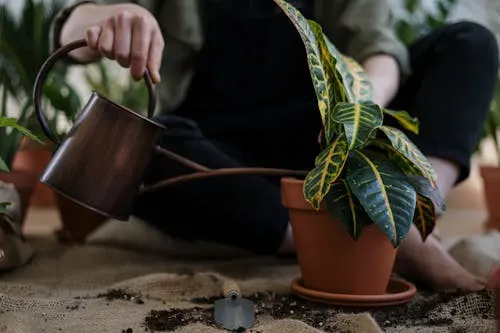
- Care for the new plant as you would a mature croton, watering when the top inch of soil feels dry and providing bright, indirect light.
Tips for Successful Croton Propagation
- Cleanliness is Key: Always use sterilized tools to prevent fungal or bacterial infections.
- Monitor Humidity: Too much moisture can cause rot, while too little can dry out the cutting. Aim for a balance.
- Be Patient: Crotons can be slow to root, so don’t rush the process.
- Avoid Overwatering: Overly wet soil can lead to root rot, especially before roots form.
- Protect from Sap: The milky sap can irritate skin and eyes, so handle cuttings carefully and wash your hands after working with the plant.
Common Propagation Problems and Solutions
- Cutting Wilts or Yellows: This may indicate too much direct sunlight or insufficient humidity. Move the cutting to indirect light and increase humidity with misting or a plastic cover.
- No Root Growth: If roots don’t form after 8 weeks, the cutting may not be viable. Try again with a fresh, healthy stem and ensure optimal conditions (warmth, humidity, and light).
- Mold or Rot: Overwatering or poor air circulation can cause fungal growth. Remove affected areas, reduce watering, and ensure proper ventilation.
Alternative Propagation Methods
While stem cuttings are the most common method, you can also propagate crotons by:
- Air Layering: This involves wounding a stem, wrapping it with moist sphagnum moss, and covering it with plastic until roots form. It’s ideal for larger plants you don’t want to cut.
- Seeds: Crotons can be grown from seeds, but this method is less common, as it’s slower and requires specific conditions. Seeds are also harder to obtain for home growers.
Caring for Your New Croton Plant
Once your propagated croton is established, follow these care tips:
- Light: Provide bright, indirect light to maintain vibrant leaf colors.
- Watering: Water when the top inch of soil is dry, and avoid waterlogging.
- Humidity: Crotons prefer moderate to high humidity. Mist occasionally or use a pebble tray in dry environments.
- Fertilizing: Feed with a balanced liquid fertilizer (e.g., 10-10-10) every 4–6 weeks during the growing season.
- Pruning: Trim leggy growth to encourage bushiness and maintain shape.
Conclusion
Propagating croton plants is a fun and cost-effective way to grow your collection or share these colorful beauties with others. By following the stem cutting method and providing the right conditions—bright light, high humidity, and well-draining soil—you can successfully propagate crotons and enjoy their stunning foliage for years to come. With a little patience and care, your new croton plants will thrive, adding a burst of color to your space