Japanese maple trees (Acer palmatum) are cherished for their delicate foliage, vibrant colors, and graceful structure, making them a stunning addition to any garden or landscape. Pruning is essential to maintain their health, enhance their natural beauty, and promote strong growth. However, these slow-growing trees require careful pruning to avoid stress or damage. This guide covers everything you need to know about prune Japanese maple tree, including when, how, and why to prune, along with tips for success.
Why Prune Japanese Maple Tree?
Pruning Japanese maples serves several purposes:
- Health: Removes dead, damaged, or diseased branches to prevent decay and pests.
- Shape: Enhances the tree’s natural form, maintaining its elegant, sculptural appearance.
- Airflow and Light: Improves air circulation and light penetration, reducing the risk of fungal diseases.
- Size Control: Keeps the tree’s size manageable, especially for dwarf varieties or container-grown maples.
- Aesthetic Appeal: Highlights the tree’s unique branching patterns and vibrant foliage.
Proper pruning ensures your Japanese maple remains healthy and visually striking year-round.
When to Prune a Japanese Maple
Timing is critical when pruning Japanese maples, as improper timing can stress the tree or cause sap loss. The best times to prune are:
- Late Winter to Early Spring (Dormant Season): Prune when the tree is dormant, typically February to early March, before new growth begins. This minimizes sap bleeding and allows the tree to heal quickly as spring growth starts.
- Mid-Summer (Light Pruning): For minor shaping or removing small dead branches, early summer (June to July) is suitable after the spring growth flush. Avoid heavy pruning in summer to prevent stress.
- Avoid Fall Pruning: Pruning in fall can stimulate new growth that won’t harden before winter, making the tree vulnerable to cold damage.
For young trees, light pruning can be done annually to establish structure. Mature trees may only need pruning every 2–3 years for maintenance.
Tools You’ll Need
Use the right tools to ensure clean cuts and minimize damage:
- Hand Pruners: For small branches (up to ½ inch thick).
- Loppers: For larger branches (½ to 1½ inches thick).
- Pruning Saw: For thick branches (over 1½ inches).
- Sterilizing Solution: Use rubbing alcohol or a 10% bleach solution to clean tools between cuts to prevent disease spread.
- Gloves and Safety Glasses: Protect your hands and eyes during pruning.
Sharpen and sterilize tools before starting to ensure precise cuts and avoid introducing pathogens.
How to Prune a Japanese Maple
Follow these steps to prune your Japanese maple effectively:
1. Assess the Tree
- Inspect the tree for dead, damaged, or diseased branches, which appear brittle, discolored, or shriveled.
- Identify crossing or rubbing branches that could cause wounds.
- Determine the desired shape, keeping the tree’s natural form in mind (upright, weeping, or rounded, depending on the variety).
2. Start with Dead and Damaged Wood
- Remove dead, broken, or diseased branches first, cutting back to healthy wood or the branch collar (the swollen area where the branch meets the trunk).
- Make clean cuts at a 45-degree angle to promote healing and prevent water pooling.
3. Thin for Airflow and Light
- Remove crowded or crossing branches to improve air circulation and light penetration, reducing the risk of fungal issues like powdery mildew.
- Focus on inner branches that block light to the tree’s interior, but avoid removing more than 20% of the canopy in one session.
4. Shape the Tree
- Lightly trim branch tips to maintain the tree’s natural shape. For weeping varieties (e.g., ‘Dissectum’), focus on enhancing the cascading effect.
- Step back frequently to check the overall form, ensuring a balanced, open structure.
- Avoid heavy pruning, as Japanese maples grow slowly and may not recover quickly.
5. Prune Suckers and Water Sprouts
- Remove suckers (shoots growing from the base) and water sprouts (vigorous, upright shoots) to maintain the tree’s structure and direct energy to healthy growth.
6. Clean Up
- Collect and dispose of pruned branches to prevent pests or diseases.
- Sterilize tools after pruning to avoid spreading pathogens to other plants.
Pruning Tips for Specific Varieties
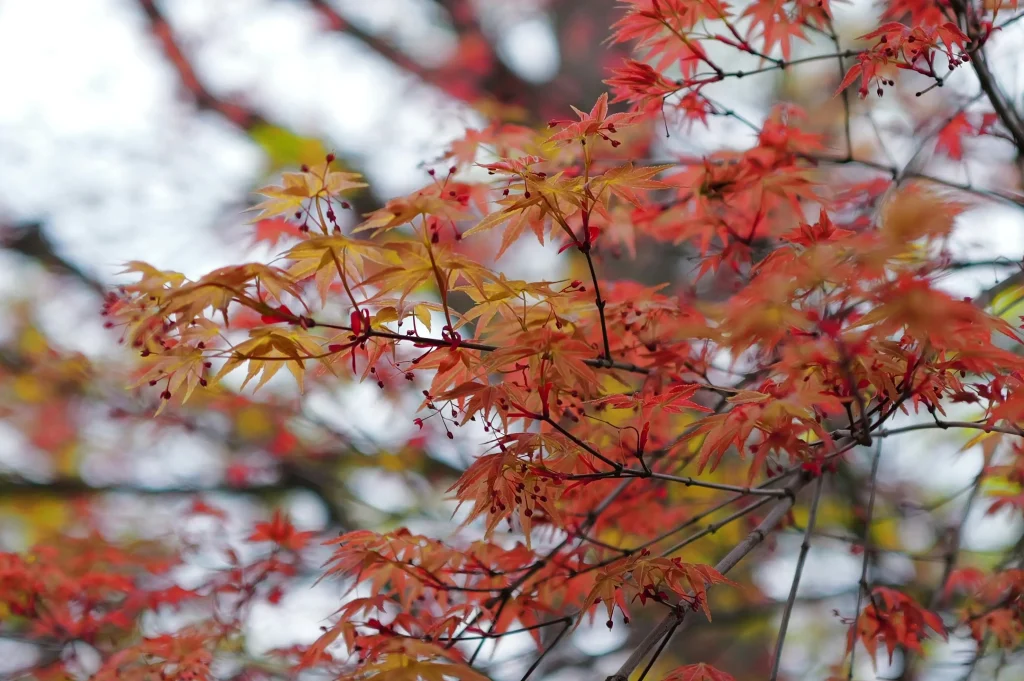
- Upright Varieties (e.g., ‘Bloodgood,’ ‘Sango Kaku’): Focus on maintaining a balanced, open canopy. Remove inward-growing branches to highlight the tree’s upright form.
- Weeping Varieties (e.g., ‘Crimson Queen,’ ‘Dissectum’): Prune to enhance the cascading effect, removing upward-growing shoots that disrupt the weeping shape.
- Dwarf Varieties (e.g., ‘Shaina’): Use light pruning to control size, as these are often grown in containers or small gardens.
Common Pruning Mistakes to Avoid
- Over-Pruning: Removing too many branches can stress the tree and stunt growth. Never remove more than 20–25% of the canopy at once.
- Cutting Too Close to the Trunk: Avoid flush cuts; leave the branch collar intact to promote healing.
- Pruning at the Wrong Time: Late spring or fall pruning can cause sap loss or frost damage.
- Using Dull Tools: Jagged cuts from dull blades increase the risk of disease and slow healing.
Post-Pruning Care
After pruning, give your Japanese maple extra care to support recovery:
- Water: Ensure consistent moisture, watering deeply if the soil is dry.
- Mulch: Apply a 2–3-inch layer of organic mulch (e.g., bark or compost) around the base to retain moisture and regulate soil temperature, keeping it away from the trunk.
- Fertilize Sparingly: If pruning in spring, apply a light dose of slow-release, balanced fertilizer (e.g., 10-10-10) to support new growth.
- Monitor for Stress: Watch for signs of stress, like wilting or leaf drop, and adjust light, water, or humidity as needed.
Special Considerations
- Young Trees: Focus on structural pruning to establish a strong framework. Remove competing leaders and weak branches early.
- Mature Trees: Prune minimally to maintain shape and health, as older trees recover more slowly.
- Container-Grown Maples: Prune lightly to control size and check for root-bound conditions, repotting every 2–3 years if needed.
Common Issues After Pruning
- Leaf Scorch: If leaves turn brown or crispy, ensure the tree is protected from intense sun or wind and increase watering.
- Pest Infestation: Pruning wounds can attract pests like aphids or scale. Inspect regularly and treat with neem oil if needed.
- Fungal Diseases: Poor airflow or wet conditions post-pruning can lead to powdery mildew or verticillium wilt. Ensure good drainage and thin the canopy as needed.
Final Tips for Success
- Prune Conservatively: Japanese maples are slow-growing, so less is more when shaping.
- Know Your Variety: Research your specific cultivar (e.g., ‘Bloodgood’ or ‘Crimson Queen’) to understand its growth habit and pruning needs.
- Protect from Elements: After pruning, shield the tree from strong winds or extreme temperatures to aid recovery.
- Be Patient: Japanese maples take time to show new growth, so don’t expect immediate results.
Conclusion
Pruning a Japanese maple tree is both an art and a science, requiring careful timing, technique, and attention to the tree’s natural form. By pruning during the dormant season, using sharp tools, and focusing on health and shape, you can keep your Japanese maple vibrant and structurally sound. Whether you’re maintaining a towering ‘Bloodgood’ or a delicate ‘Dissectum,’ proper pruning will enhance its beauty and ensure it thrives for years to come.