Spider plants (Chlorophytum comosum) are beloved for their vibrant, arching leaves and low-maintenance care requirements, making them a favorite among both novice and seasoned plant enthusiasts. However, proper watering is key to ensuring your spider plant remains healthy and vibrant. In this guide, we’ll explore the best practices for spider plant watering guide, including how often to water, how much water to use, and signs to watch for to avoid common watering mistakes.
Understanding Spider Plant Watering Needs
Spider plants are relatively forgiving, but they do have specific watering preferences. Native to tropical and southern Africa, these plants thrive in environments that mimic their natural habitat—moist but well-draining conditions. Overwatering or underwatering can lead to issues like root rot or wilting, so striking the right balance is essential.
Factors That Affect Watering
Several factors influence how often and how much you should water your spider plant:
- Light: Spider plants in bright, indirect light may dry out faster than those in lower light.
- Temperature and Humidity: Warmer, drier environments increase watering needs, while cooler, humid conditions may reduce them.
- Pot Size and Soil: Smaller pots and fast-draining soil mixes dry out more quickly.
- Season: Spider plants typically need more water during the growing season (spring and summer) and less during fall and winter.
How Often Should You Water a Spider Plant?
As a general rule, water your spider plant when the top inch of soil feels dry to the touch. This typically translates to:
- Spring and Summer: Water every 1–2 weeks, depending on environmental conditions.
- Fall and Winter: Reduce watering to every 2–3 weeks, as the plant’s growth slows.
To check if your plant needs water, insert your finger about an inch into the soil. If it’s dry, it’s time to water. If it’s still moist, wait a few more days.
Tips for Watering Frequency
- Avoid a Rigid Schedule: Instead of watering on a set day, check the soil regularly to adapt to your plant’s needs.
- Monitor Environmental Changes: If you move your plant to a brighter spot or the seasons change, adjust your watering routine accordingly.
How Much Water Does a Spider Plant Need?
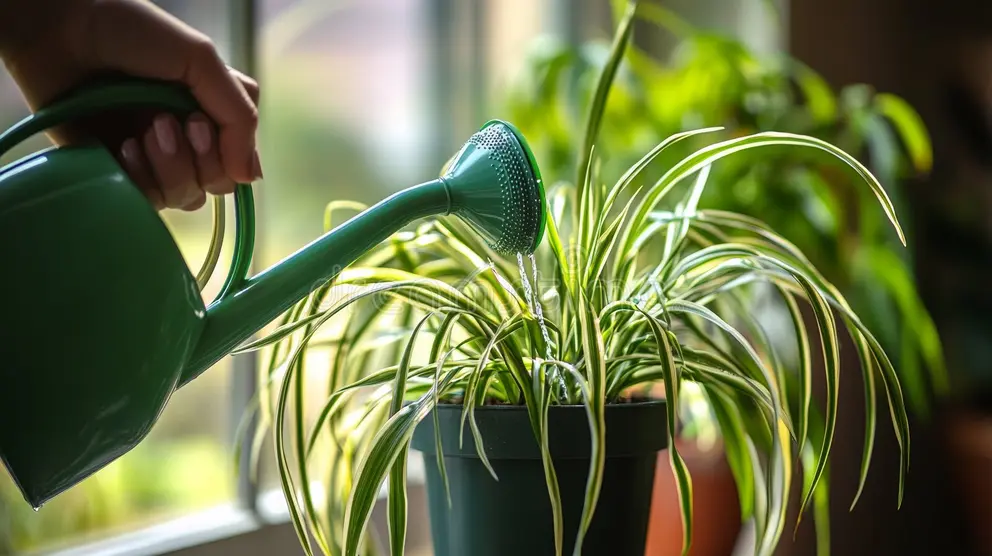
When watering, aim to thoroughly moisten the soil without leaving the plant sitting in water. Here’s how to do it right:
- Use Room-Temperature Water: Cold water can shock the roots, while hot water may harm them.
- Water Evenly: Pour water slowly around the base of the plant until it begins to drain from the bottom of the pot.
- Empty the Saucer: Remove any excess water from the drainage saucer to prevent root rot.
Spider plants prefer to be kept slightly moist but not soggy. A good rule of thumb is to water until the soil is evenly damp, then allow it to dry out slightly before the next watering.
Signs of Improper Watering
Paying attention to your spider plant’s appearance can help you identify watering issues early.
Overwatering
- Symptoms: Yellowing leaves, mushy stems, or a foul odor from the soil (indicating root rot).
- Solution: Reduce watering, ensure proper drainage, and repot the plant in fresh, well-draining soil if root rot is suspected.
Underwatering
- Symptoms: Wilting, drooping leaves, or brown, crispy leaf tips.
- Solution: Water more frequently and ensure the soil is adequately moistened during each watering session.
Best Practices for Spider Plant Watering
To keep your spider plant healthy, follow these best practices:
- Use Well-Draining Soil: A standard potting mix with added perlite or sand works well to prevent waterlogging.
- Choose a Pot with Drainage Holes: This allows excess water to escape, reducing the risk of root rot.
- Avoid Tap Water if Possible: Spider plants are sensitive to fluoride and chlorine in tap water, which can cause leaf tip burn. Use distilled or rainwater for best results, or let tap water sit out for 24 hours to allow chemicals to dissipate.
- Mist Occasionally: In dry environments, misting the leaves can help maintain humidity, but don’t rely on misting as a substitute for proper watering.
Seasonal Watering Adjustments
Spider plants have different needs depending on the time of year:
- Spring and Summer: During the active growing season, spider plants may need more frequent watering to support new growth and the production of “pups” (baby spider plants).
- Fall and Winter: As growth slows, reduce watering to prevent over-saturation. Allow the soil to dry out more between waterings.
Troubleshooting Common Watering Issues
If your spider plant isn’t looking its best, consider these common watering-related problems:
- Brown Leaf Tips: Often caused by fluoride in tap water, overwatering, or low humidity. Trim the brown tips with clean scissors and adjust your watering habits.
- Wilting Despite Watering: This could indicate root rot from overwatering or poor drainage. Check the roots and repot if necessary.
- Slow Growth: Underwatering or insufficient light may be the culprit. Ensure the plant is getting enough water and bright, indirect light.
Conclusion
Watering your spider plant correctly is key to its long-term health and vibrancy. By checking the soil regularly, using well-draining soil, and adjusting your watering routine based on environmental factors, you can keep your spider plant thriving for years to come. With these tips, you’ll be well-equipped to give your spider plant the care it needs to flourish.