As a cat owner, you want to keep your feline friend safe while enjoying the beauty of indoor plants. However, some popular houseplants toxic to cats, can be, if ingested. Here’s a list of 10 common houseplants to watch out for, along with their potential dangers and tips to keep your cat safe.
1. Lilies (Lilium spp. and Hemerocallis spp.)
Lilies, including peace lilies and Easter lilies, are extremely toxic to cats. Even small amounts of the leaves, pollen, or water from the vase can cause severe kidney failure.
- Symptoms: Vomiting, lethargy, loss of appetite, and kidney failure.
- Tip: Avoid bringing lilies into your home, and opt for cat-safe alternatives like spider plants.
2. Aloe Vera (Aloe barbadensis miller)
While aloe vera is prized for its medicinal properties, it’s toxic to cats. The gel is safe, but the outer rind contains saponins that can cause digestive upset.

- Symptoms: Vomiting, diarrhea, and lethargy.
- Tip: Keep aloe plants out of reach or switch to non-toxic succulents like haworthia.
3. Pothos (Epipremnum aureum)
Pothos, also known as devil’s ivy, is a popular low-maintenance plant with heart-shaped leaves. It contains calcium oxalate crystals, which can irritate a cat’s mouth and stomach.
- Symptoms: Oral irritation, drooling, vomiting, and difficulty swallowing.
- Tip: Hang pothos in high baskets or replace with cat-friendly ferns.
4. Dieffenbachia (Dumb Cane)
Dieffenbachia’s attractive foliage makes it a common houseplant, but its sap contains calcium oxalate crystals that are toxic to cats.
- Symptoms: Severe mouth pain, swelling, drooling, and vomiting.
- Tip: Place dieffenbachia in a room your cat can’t access or choose a Boston fern instead.
5. Snake Plant (Sansevieria spp.)
Snake plants are hardy and stylish, but they contain saponins that can cause mild toxicity in cats if ingested.
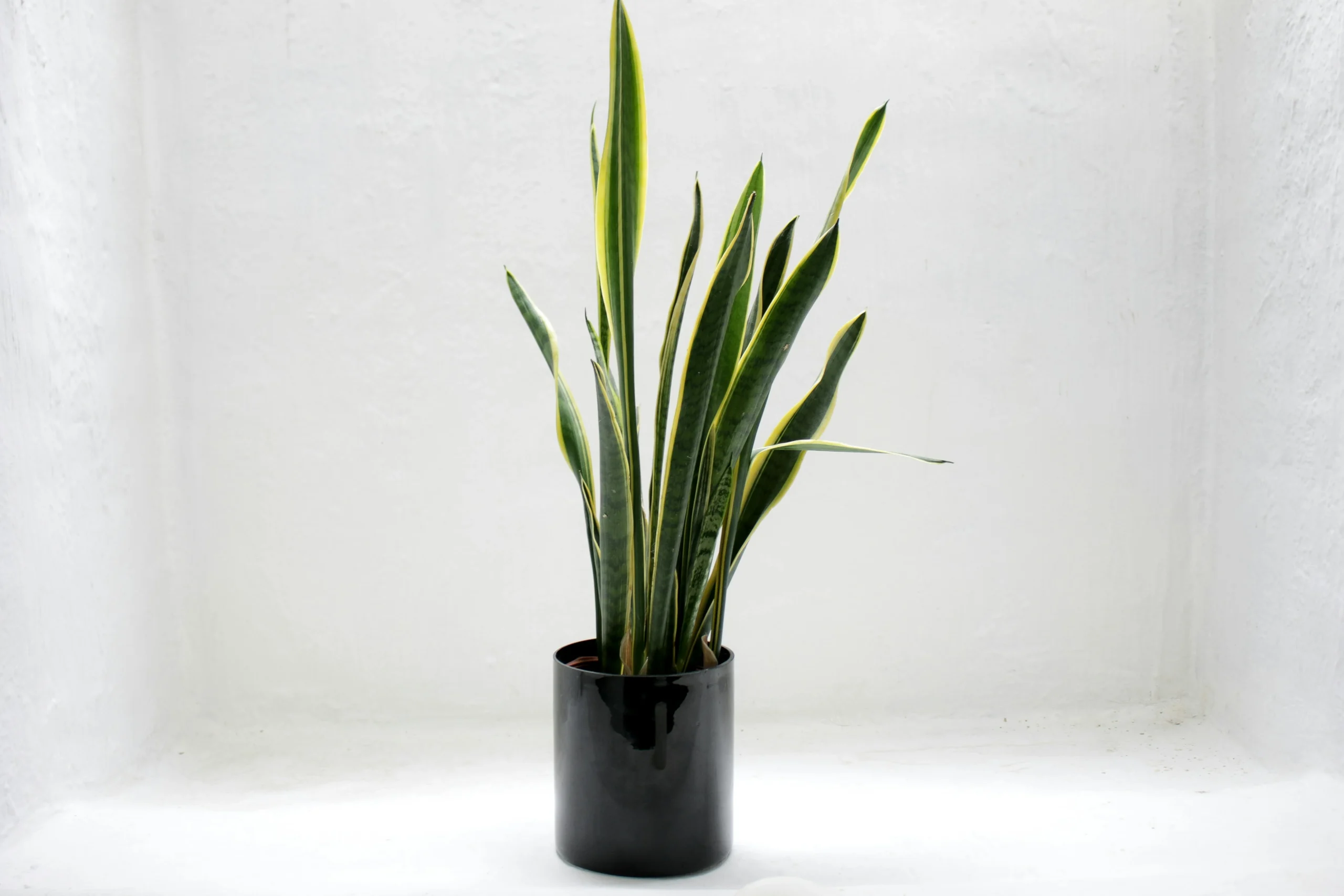
- Symptoms: Nausea, vomiting, and diarrhea.
- Tip: Keep snake plants on high shelves or opt for a cat-safe parlor palm.
6. Philodendron
Philodendrons, with their lush, green leaves, are a staple in many homes. Like pothos, they contain calcium oxalate crystals that can harm cats.
- Symptoms: Oral irritation, swelling, vomiting, and difficulty swallowing.
- Tip: Use wall-mounted planters or switch to a non-toxic calathea.
7. Monstera Deliciosa
Known as the Swiss cheese plant, monstera is trendy but toxic to cats due to its calcium oxalate content.
- Symptoms: Mouth irritation, drooling, vomiting, and swallowing difficulties.
- Tip: Place monstera out of reach or choose a cat-safe prayer plant.
8. Jade Plant (Crassula ovata)
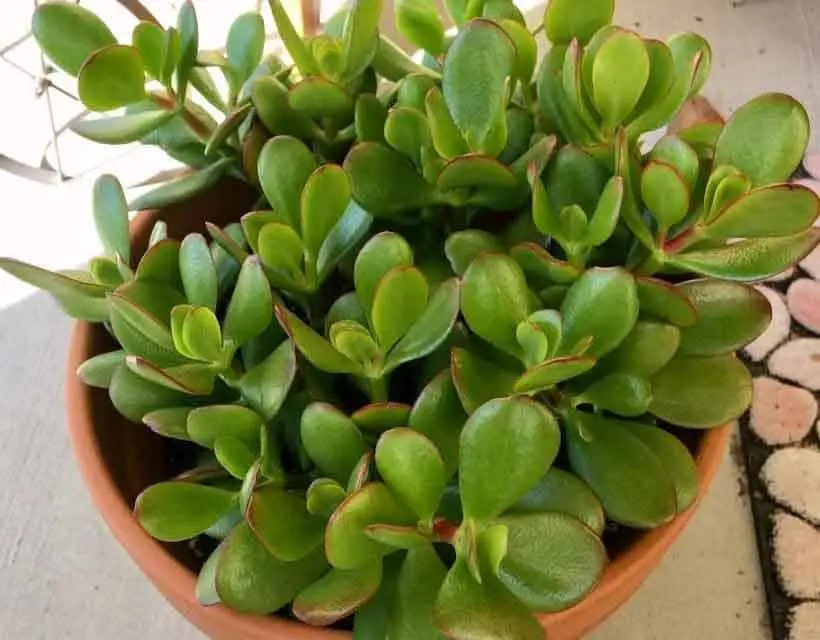
Jade plants are popular succulents, but they can cause mild to moderate toxicity in cats if chewed.
- Symptoms: Vomiting, lethargy, and incoordination.
- Tip: Keep jade plants in a cat-free zone or replace with a non-toxic echeveria.
9. Sago Palm (Cycas revoluta)
Sago palms are often used as decorative houseplants, but all parts of the plant, especially the seeds, are highly toxic to cats.
- Symptoms: Vomiting, diarrhea, liver failure, and seizures.
- Tip: Avoid sago palms entirely and consider a cat-safe areca palm instead.
10. English Ivy (Hedera helix)
English ivy is a beautiful trailing plant, but its leaves contain falcarinol and falcarinone, which are toxic to cats.
- Tip: Hang ivy out of reach or replace with a cat-friendly string of pearls.
- Symptoms: Vomiting, diarrhea, abdominal pain, and hypersalivation.
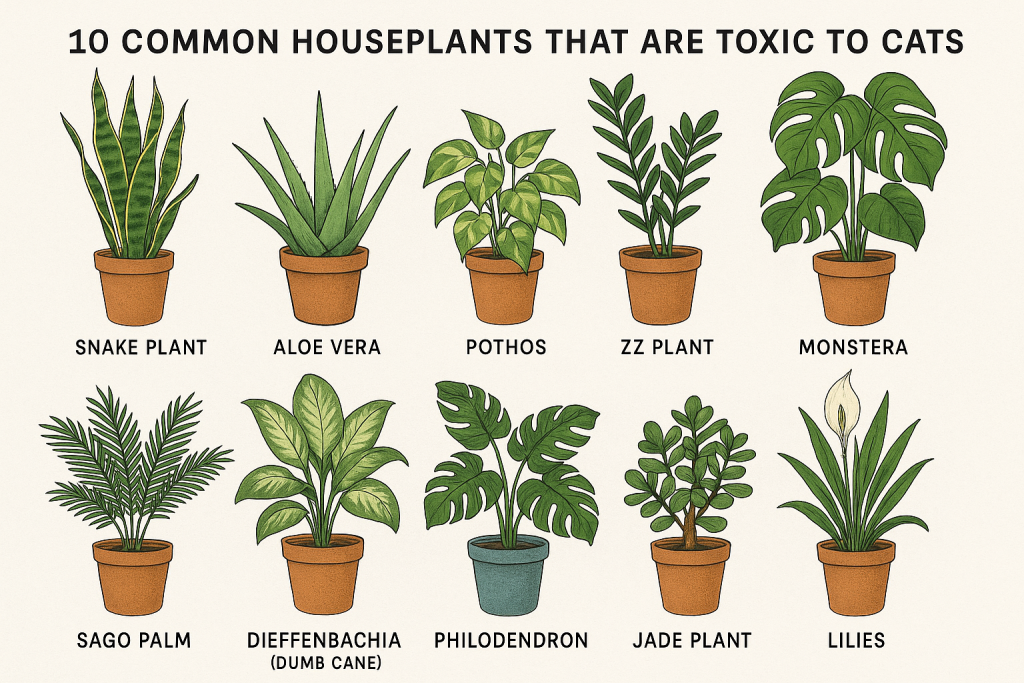
Houseplants Toxic to Cats: Prevention Tips
- Research Before Buying: Always check if a plant is toxic to cats before bringing it home.
- Use Barriers: Place toxic plants in hanging baskets, high shelves, or rooms your cat can’t access.
- Provide Alternatives: Offer cat-safe plants like catnip or cat grass to satisfy your cat’s chewing instincts.
- Monitor Behavior: Watch for signs of plant chewing and consult a vet immediately if you suspect ingestion.
- Contact a Vet: If your cat ingests a toxic plant, contact your veterinarian or the ASPCA Poison Control Center (1-888-426-4435) right away.
Final Thoughts
Creating a cat-safe home doesn’t mean sacrificing greenery. By avoiding these toxic houseplants and choosing pet-friendly alternatives, you can keep your cat healthy and your home vibrant. Always prioritize your cat’s safety and consult a veterinarian if you’re unsure about a plant’s toxicity.