Picture your yard blooming with pink and white flowers each spring. Fall brings bright red and purple leaves. Birds make nests in the branches. This adds life to your outdoor space. Dogwood trees can change your yard. They create a lively, easy-care spot. Dogwoods fit well in most home gardens. They grow easily across the U.S. Gardeners love their beauty and how simple they are. This guide shows you every step. You will get clear tips to plant your first dogwood tree. New gardeners can do this. You can succeed easily.
Understanding Dogwood Trees Before Planting
Dogwood trees make any yard feel special. They give cool shade and bright color all year. Know the facts before you pick a tree. This helps you pick the right tree. It also helps you avoid common issues.
What Are Dogwood Trees and Their Varieties?
Dogwood trees grow best with some shade. They like four to six hours of sun each day. Too much light will burn their leaves. The ground needs to drain well. It should also be acidic. Keep the pH between 5.5 and 6.5 for healthy growth.

Grab a cheap soil test kit from any store. If your soil is too basic, mix in some peat moss. This makes the soil like a forest floor. Dogwoods thrive there naturally. Keep the soil moist for healthy roots. But standing water will cause rot.
Common Challenges and How to Avoid Them
Anthracnose thrives in wet, muggy spots. It turns leaves brown. They fall off too soon. Deer also like to munch on young branches.
Pick a strong type, like ‘Appalachian Spring’. It fights off sickness well. Plant it on higher ground. This helps air move around. Good air stops fungus from growing. Check USDA tips for your area. That keeps your plants safe.
Selecting the Perfect Location in Your Backyard
Getting a healthy tree starts with its spot. Dogwood trees like quiet areas. They often grow well at the edge of woods. When you look, check the light. Feel the soil. See if there is enough space.
Assessing Sunlight and Shade Patterns

Notice the sun’s path across your yard for a few days. Morning light works best. Afternoon shade protects from strong heat. Full sun can scorch the leaves in hot summers. Use a sun tracker app on your phone. Or hang a piece of cloth to test the shade. Aim for dappled light under taller trees. This keeps your dogwood blooming strong and healthy.
Evaluating Soil and Drainage
Dogwood trees need rich, loamy soil. It must not stay soggy. Clay soil holds too much water. This chokes the roots. Sandy ground dries out quickly. Roots won’t get enough water.
Dig a hole one foot deep and wide. Fill it with water. Wait one full day. If water remains, fix the drainage. Mix in some compost. A raised bed works well too. Good flow stops root problems.
Considering Space and Companion Plants
These trees grow 15 to 30 feet tall. Keep them 10 to 15 feet from your home or fence. Too little room stresses them.
Plant ferns or hostas close by. These plants give a forest feel. They also cover the ground well. Bees and butterflies will visit this spot. Your yard turns into a small wildlife spot.

Preparing Your Backyard for Planting
Prep work sets up success. Do it right, and your tree roots deep. Fall or spring timing gives the best start.
Choosing the Best Planting Time
Plant in late fall, after all the leaves drop. You can also plant in early spring, before the buds pop open. Roots settle well in cool weather. The leaves don’t get stressed then.
Look up frost dates for your area. Your local extension site can help. Cornell has a good tool for many spots. Don’t plant during summer heat. Also, steer clear of winter freezes. This simple tip makes plants much more likely to live.
Gathering Essential Tools and Materials
Grab a sharp shovel for digging. You will also need mulch, stakes, and a watering can. Always wear gloves to keep your hands safe.

Pick up mycorrhizal fungi powder from a garden store. This helps plant roots soak up food fast. A soil test kit finishes your supplies. These few things make the whole job easy.
Soil Preparation Techniques
First, clear out all the weeds. Gently break up the soil to loosen it. Mix in some rich leaf mold. This makes the ground healthier for plants.
Next, spread 2 to 3 inches of pine bark. Put it around the entire area. The bark helps hold water in the soil. It also stops weeds from sprouting up. This method helps plants grow strong. It feels more natural for them.
Step-by-Step Planting Process
Now comes the fun part. Follow these steps carefully. Take your time to get it right.
Digging the Perfect Planting Hole
Mark a spot. It should be twice as wide as the root ball. Dig it to the same depth as the pot. This gives roots room to spread.
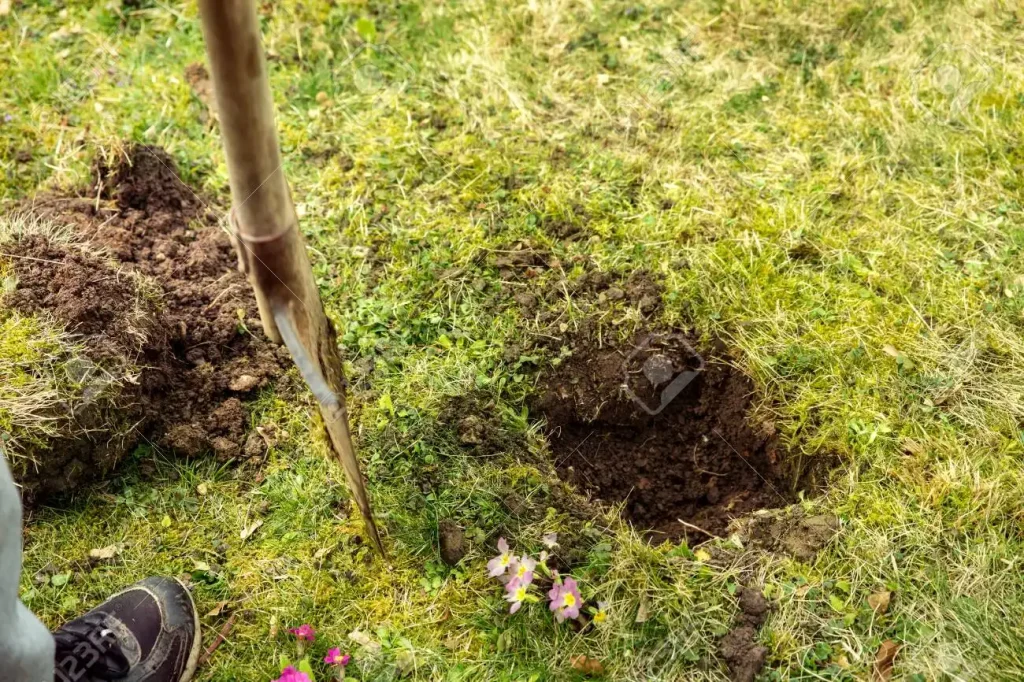
Use your shovel to scrape the sides rough. Smooth walls make roots circle. Loose soil helps them grow out. Dig when the ground is dry. It makes the job easier.
Handling and Positioning the Tree
First, water the tree’s root ball. This makes it easier to remove. Gently slide the tree from its pot. Check the roots for damage or tangles. If roots are looping tight, gently pull them apart. Straight roots help the tree grow strong. Set the tree in the hole. The top root should sit level with the ground. Turn its best side towards your view.
Backfilling and Initial Watering
Add your yard soil around the roots. Press it down gently, but keep it firm. Avoid air pockets. These can hurt young plants.
Build a small dirt ring to hold water. Pour in ten to fifteen gallons right away. This helps everything settle. Watch for bubbles. They show where to add more soil.

Dogwood Tree Care After Planting
Your work doesn’t end at planting. The first year needs attention. Watch close to spot issues early.
Watering and Mulching Schedule
Keep soil moist with about 1 inch of water weekly. Deep soaks beat shallow ones. Overdo it, and roots drown.
Put 2 to 4 inches of mulch in a 3-foot circle. Keep it off the trunk to stop rot. Refresh it yearly for steady moisture.
Pruning and Fertilizing Basics
Prune in late winter to shape branches. Cut dead or crossing limbs only. Light touches keep it natural.
Feed with acid fertilizer in spring. Use half the bag amount to start. Too much causes soft growth that breaks easy. Test soil first for needs.

Monitoring for Pests and Diseases
Look for holes from borers or white spots from mildew. Check leaves monthly in growing season. Early signs let you act fast.
Spray neem oil for bugs, it’s safe and works well. Call your local extension for advice on local threats. Healthy trees fight off most problems.
Conclusion
Planting dogwood trees in your backyard starts with smart choices. Pick the right spot, prep the soil, and plant with care. Then, water and watch as it grows. Follow these steps for a tree that blooms for decades. You’ll get spring flowers, fall color, and happy birds. Native kinds suit your zone best and draw pollinators. Good drainage and steady early care make all the difference. Grab your shovel today. Add this beauty to your yard and watch it thrive. Your space will thank you with years of joy.