
Have you always dreamed about being able to pick fresh, sweet blackberries directly out of your backyard and balcony without experiencing pain from thorny brambles or having them take over the entire garden? If so, try planting semi-everbearing, grow thornless blackberry in pots. They are probably the best option for any gardener with limited space, whether you live in the United States, the United Kingdom, Canada, Australia or anywhere else.
In this simple, user-friendly starter guide I will explain to you the following: what are some of the more popular semi-everbearing thornless varieties of blackberries for containers, which type of container to use, how plant your blackberries correctly, how much water and fertilizer they need, how to prune them, when and how to harvest them, and any possible problems that may arise while growing your blackberries in containers.
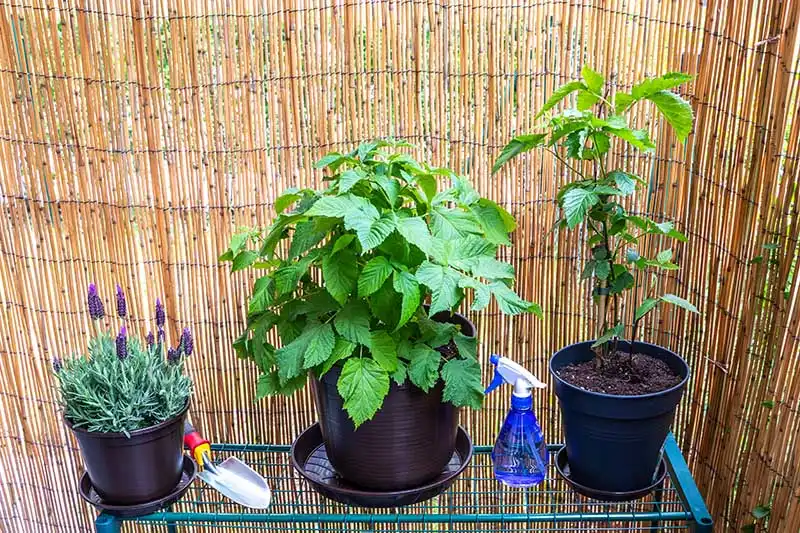
Best Thornless Blackberry Varieties for Containers
Choose compact, container-optimized varieties for best results:
- Baby Cakes –Dwarf thornless (3-4 feet tall); bred for pots; produces two crops (summer + fall); juicy berries; Zones 4-9.
- Apache – Upright, thornless; 3-6 feet; sweet, large fruit; minimal support needed; great for warmer areas (Zones 6-10).
- Arapaho – Early-ripening, thornless erect canes; excellent flavor; productive in containers.
- Natchez – Semi-erect thornless; large, sweet berries; high yields; good for pots with light support.
- Triple Crown – Semi-erect thornless; massive, flavorful fruit; reliable in containers.
- Chester – Trailing thornless; very productive; needs trellis but excellent for larger pots.
- Prime-Ark Freedom –Primocane-fruiting (fruits on first-year canes); thornless; two crops possible.
Look for “dwarf,” “patio,” or “container” labels. Buy from reputable nurseries or online (e.g., Burpee, Stark Bro’s, or local garden centers).
Step-by-Step: How to Grow Thornless Blackberry in Pots
After the risk of frost, plant in the spring.
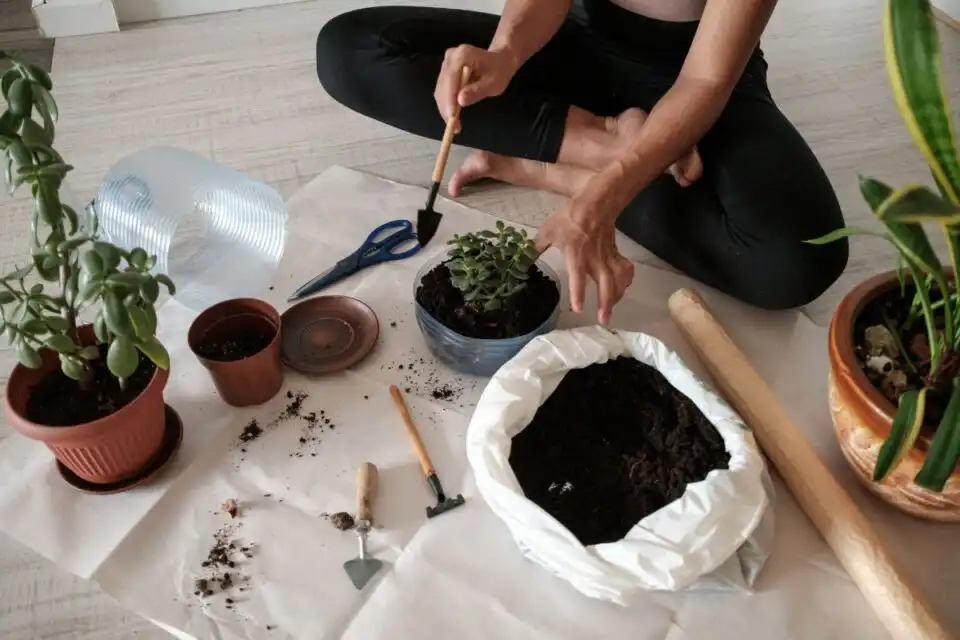
- Prepare the pot by adding soil mix and, if necessary, creating a drainage layer.
- Plant: Plant at the same depth as the nursery pot; for strong roots, bury a little deeper.
- In order to retain moisture, soak the soil and mulch the surface with two to three inches of straw or bark.
- Support: For semi-erect varieties in particular, add stakes, a cage, or a small trellis early.
First care: Keep moist for the first few weeks; if it’s hot, place in partial shade during establishment.
Watering, Fertilizing, and Daily Care Tips
- Watering: Keep the top 1-2 inches dry at all times (1-2 inches per week; more in hot weather). In summer, check every day because pots dry more quickly. Steer clear of soggy roots.
- In the spring, fertilize with a balanced organic fertilizer (10-10-10). After flowering, switch to high-potassium (for fruiting); feed every four to six weeks. Apply fertilizer designed for tomatoes or berries.
- In pots, mulching is crucial because it cools the roots and saves water.
- Pruning: Remove old floricanes (second-year canes that fruited) after harvest. 4-6 strong canes from thin primocanes (new growth). Cut back on primocane varieties in late winter.
- Winter maintenance: In cold climates, relocate pots to a protected area, insulate, and apply a lot of mulch.
Harvesting Thornless Blackberries: When and How
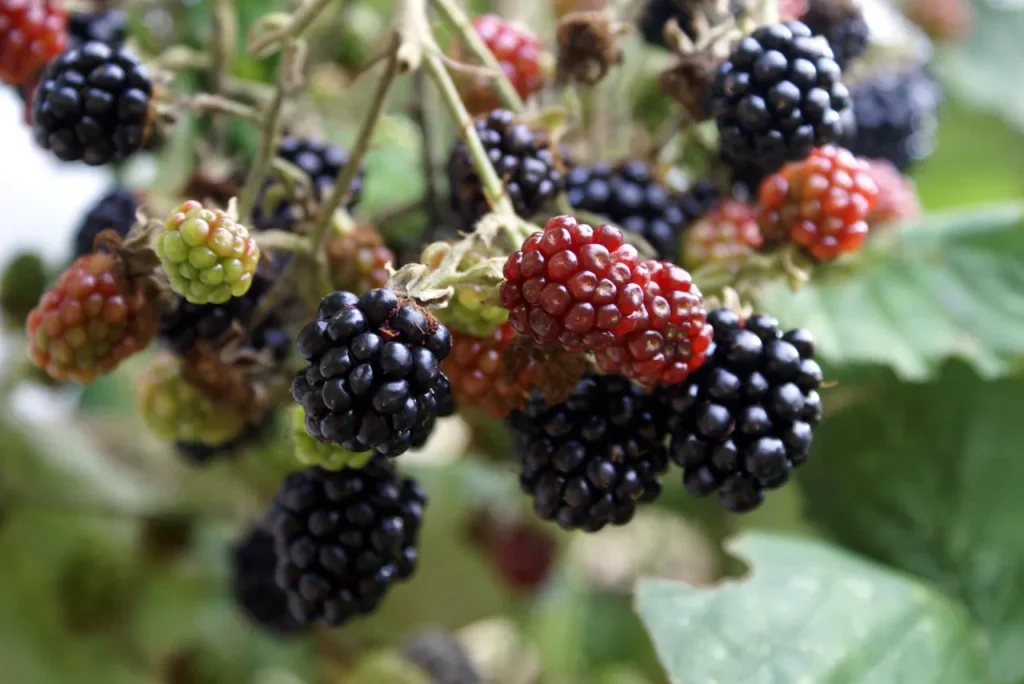
Berries ripen mid-summer to fall (60-90 days from flowering).
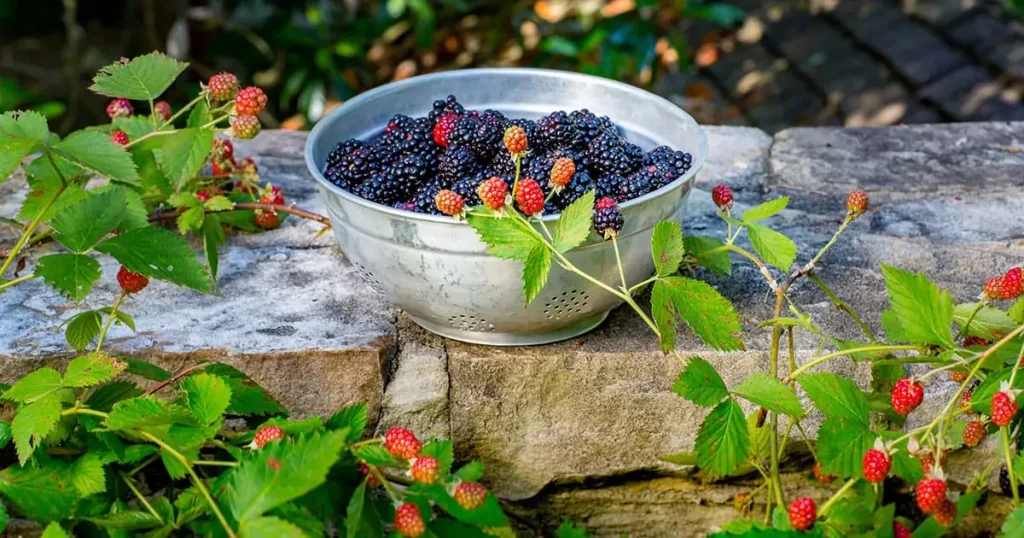
- Pick when fully black, plump, and glossy – gentle tug; they slip off easily.
- Harvest every 2-3 days for peak flavor.
- Store in fridge 3-5 days or freeze for smoothies/jams.
Expect first small crop year 1; full production year 2-3.
Troubleshooting Common Problems with Potted Thornless Blackberries
Pots amplify some issues – here’s a quick table:
| Problem | Symptoms | Causes | Solutions |
|---|---|---|---|
| Wilting/Drooping Leaves | Plants wilt despite watering | Rootbound, underwatering, pot too small/hot | Upsize pot; water more frequently; shade in peak heat; mulch heavily |
| Yellowing Leaves | Leaves pale/yellow, drop | Overwatering, nutrient deficiency, poor drainage | Improve drainage; reduce water; fertilize with balanced/acidic feed |
| No Fruit / Low Yield | Few flowers/berries | Insufficient sun, low potassium, young plant | Ensure 6+ hours sun; use high-K fertilizer; wait for maturity (year 2+) |
| Small/Bitter Berries | Tiny or tart fruit | Inconsistent water, heat stress, over-fertilizing N | Consistent moisture; shade in extreme heat; balance fertilizer |
| Root Rot | Wilting, mushy roots, foul smell | Poor drainage, overwatering | Repot with fresh mix; trim rotten roots; ensure holes/drainage |
| Leaf Curl/Distortion | Curled/twisted leaves | Heat stress, aphids, herbicide drift | Provide shade; neem oil/soap for pests; avoid nearby chemicals |
| Pests (Aphids/Spider Mites) | Sticky leaves, webbing, stunted growth | Infestation | Hose off; neem oil weekly; encourage ladybugs |
| Cane Dieback | Canes brown/die back | Winter cold, disease, drought | Protect in winter; prune dead canes; consistent water |
| Slow Growth | Small plants, few canes | Poor soil, cold roots, low nutrients | Enrich mix; fertilize spring; warm pot location |
| Fruit Cracking | Split berries | Uneven watering (dry then heavy) | Mulch; water consistently; harvest promptly |
Check plants weekly – early fixes prevent big losses!
Start Growing Thornless Blackberries in Pots Today!
Thornless blackberries in pots are a great source of pleasure and produce in small amounts of space! By selecting the right variety, using a large enough container, providing adequate sunlight, ensuring continuous moisture, and pruning lightly, you can have delicious sweet berries for many years to come.
Get your Apache plant(s), prepare your container(s), and go for it! Your patio and your palate will thank you! Have you ever grown blackberries in portable containers? If so, please share your experience in the comments section.
Good luck in your gardening endeavors – let’s hope this summer is filled with berries without thorns!


