
Do you want to cultivate an amazing garden in extreme heat where the soil dries out rapidly between watering? Have you tried gardening in an extremely hot climate and wondered what you could do to have your garden survive and flourish? If you live in an area of the United States that is hot (an arid desert such as Arizona or Texas, or a humid tropical region such as Florida or portions of Australia), then gardening is indeed a challenge and may seem impossible to accomplish. However, the newest gardening methodology is called “no-till permaculture setup”.
Just imagine having a garden that maintains moisture, prevents erosion, and provides food for you year-round while also addressing the challenges of climate change such as extreme heat from the sun and unpredictable weather patterns (such as rain and flooding). This guide will teach you how to set up a no-till permaculture system that is geared specifically for the extreme heat of your area. You will learn how to set up the system through real-world examples such as Florida’s Empower Farm and Central Texas food forests, as well as receive step-by-step directions, planting suggestions, and natural solutions that will help you compensate for the heat.
Whether you are a beginner or an experienced gardener, this guide will teach you how to create a garden that can overcome the obstacles caused by extreme heat. Let’s get started on creating a successful garden that works in harmony with the heat instead of against it!
Planning Your No-Till Permaculture Setup: Start Smart
Plan out your design before grabbing your shovel (or not because we do not using a shovel). Make sure to consider your climate. Use the Weatherspark tool to look at the weather in your area, specifically looking for insolation, precipitation and wind direction.
Selecting Your Site
Choose a location to plant with at least 6-8 hours of direct sunlight, while considering how the afternoon’s sunlight will create shade on your crops. When choosing a site to plant in arid climates, it is best to plant your crops on contour so that you can take advantage of whatever little precipitation comes along. In tropical climates, the focus should be on planting crops with windbreaks to protect them from drying out.
Map the plants to be placed in your zones when planning out your garden using permaculture zones. The plants in the zone closest to your house (Zone 1) should have the highest maintenance requirements, while plants in the outer zones (Zones 3 and up) should have the lowest maintenance requirements.
Climate Specific Modifications
- Arid and Hot-Dry Climate (like Southwest USA, Outback in Australia): The best options for implementing fresh water use are utilizing swales (ditches following the contour of your property) and basins.
- Humid & Warm Tropical Climate (like Florida and Southeast Asia): The best way to combat fungal diseases is to maximize airflow around the crop and to plant them on raised beds (Hugelkultur) to drain properly.
On a budget? Start small; a 10ft x 10ft plot can easily provide a sustainable food source for one family.
Step-by-Step: Building Your Ultimate No-Till Setup
Ready to get hands-on? Follow these steps for a hot-climate-friendly system.
Step 1: Prepare the Ground Without Tilling
Smother existing grass or weeds with cardboard or newspaper layers (occultation method). In hot-dry areas, wet the ground first to encourage decomposition.
Top with 4-6 inches of compost or aged manure for nutrients. This “lasagna gardening” builds soil without disruption.
Step 2: Incorporate Water-Harvesting Features
In arid climates, dig swales or berms to direct rainwater. For example, in Central Texas food forests, basins around trees collect runoff, creating micro-oases.
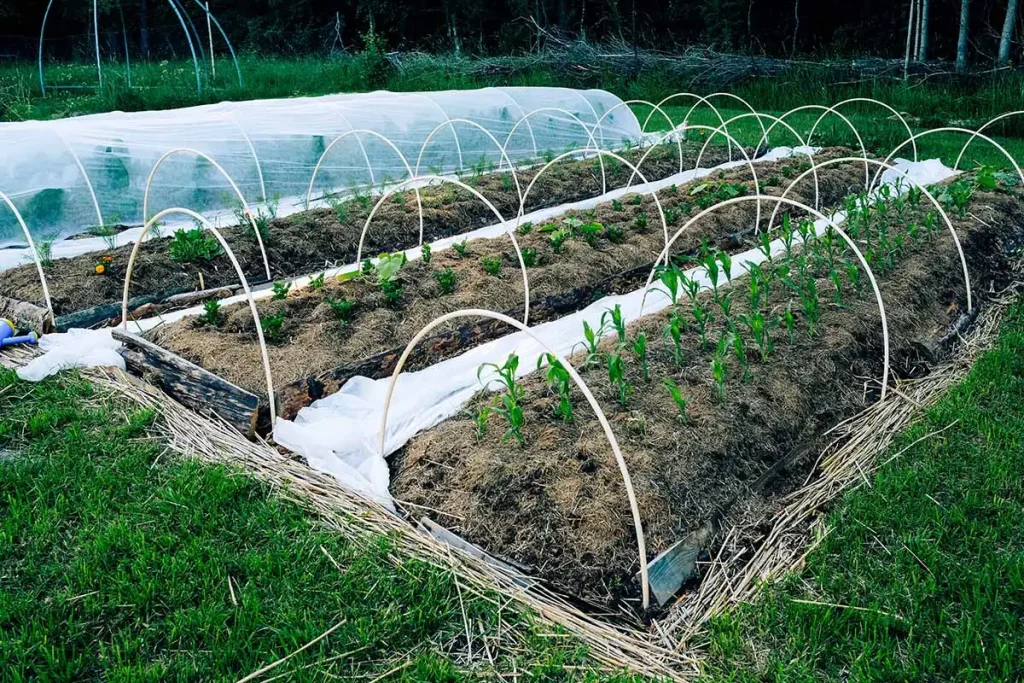
Hugelkultur beds – mounds of buried wood logs covered in soil and mulch – are gold in hot zones. The wood acts as a sponge, releasing water slowly. Build them 2-3 feet high for best results.
Step 3: Add Mulch Like Your Garden’s Life Depends On It
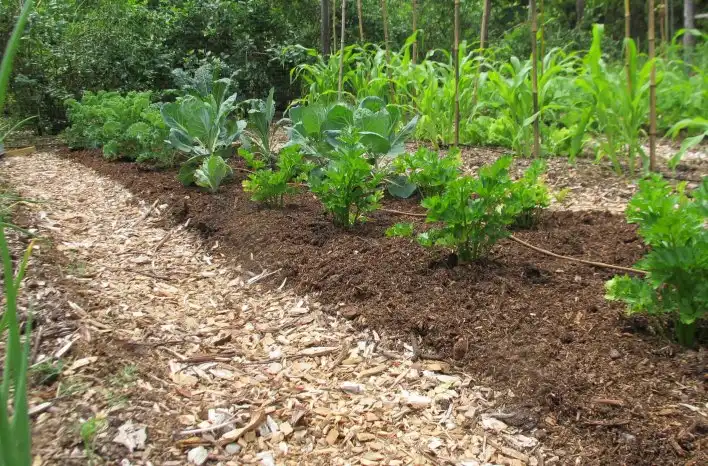
Mulch is your secret weapon against evaporation. Use 4-8 inches of straw, wood chips, or leaves. In tropics, opt for finer mulches to avoid pests.
From Empower Farm’s no-till approach, heavy mulching with cover crops like legumes retains soil moisture and adds nitrogen naturally.

Step 4: Plant for Diversity and Shade
Layer your garden: Tall trees for canopy (e.g., moringa in tropics), shrubs for windbreaks, and ground covers for soil protection.
Key plants for hot climates:
- Nitrogen-fixers: Pigeon pea, cowpea – hardy and shade-providing.
- Fruit trees: Deep-rooted like fig or citrus for arid zones.
- Veggies: Heat-tolerant like okra, eggplant, and sweet potatoes.
Interplant with companions: Marigolds deter nematodes, basil repels pests.
Step 5: Integrate Shade and Wind Buffers
In hot arid climates, aim for 50% overhead shade using vines on trellises (e.g., passionfruit). East-side deciduous vines (30% shade) let in morning sun; west-side evergreens (75%) block harsh afternoons.
Windbreaks of hardy trees like acacia reduce evaporation by 20-30%.
Step 6: Establish Living Mulch and Cover Crops

Sow low-growing covers like clover or vetch between plants. They suppress weeds, fix nitrogen, and keep soil cool – essential in scorching heat.
Plant Recommendations for Hot Climate No-Till Permaculture
Here’s a handy table of resilient plants suited to no-till setups in hot climates. Focus on perennials for long-term sustainability.
| Plant Type | Examples | Benefits in Hot Climates | Growing Tips |
|---|---|---|---|
| Trees | Moringa, Fig, Pomegranate | Deep roots access water; provide shade | Plant on swales; mulch heavily |
| Shrubs | Pigeon Pea, Butterfly Bush | Nitrogen-fixing; windbreaks | Interplant with veggies for diversity |
| Vines | Passionfruit, Grape | Overhead shade; quick coverage | Trellis for airflow; harvest regularly |
| Ground Covers | Sweet Potato, Clover | Soil protection; moisture retention | Sow densely; mow if needed |
| Annual Veggies | Okra, Eggplant, Peppers | Heat-tolerant; high yields | Succession plant; companion with herbs |
| Herbs | Basil, Oregano, Lemongrass | Pest repellents; edible | Plant in polycultures for mutual benefits |
This mix creates a balanced ecosystem, reducing work while maximizing output.

Common Challenges and Solutions in Hot Climates
Hot climates amplify issues like drought or pests. Monitor soil moisture with a simple probe. If yields drop, add more organic matter. Rotate crops to prevent buildup of heat-loving diseases.
Wrapping Up: Your Path to a Heat-Resistant Permaculture Paradise
Working with nature’s rhythms to establish the best no-till permaculture in hot climates involves preserving water, creating soil, and encouraging diversity. You’ll soon have a flourishing garden that can withstand the heat if you start small, pay attention, and adjust.
This system delivers fresh produce, conserves resources, and helps the environment—whether it’s fighting Florida humidity or Texas droughts. Which would you start with, shade vines or a hugelkultur bed? Let’s create resilient gardens together by sharing in the comments!


