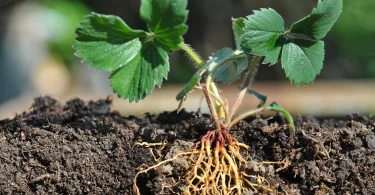
The Morning Glory vine is a beloved climbing plant cherished for its vibrant, trumpet-shaped flowers that open with the morning sun and fade by afternoon, creating a dazzling daily display of color. Native to tropical and subtropical regions, this fast-growing vine is prized not only for its striking blooms—which come in shades of blue, purple, pink, and white—but also for its lush, heart-shaped leaves that provide a rich backdrop to the flowers. Morning Glory vines are incredibly versatile and easy to grow, making them a favorite for gardeners seeking to add quick vertical interest to fences, trellises, arbors, or pergolas. Their rapid growth helps cover unsightly structures or create natural privacy screens, while their cheerful blossoms attract pollinators like bees and hummingbirds, enhancing garden biodiversity. However, while Morning Glory vines are generally low-maintenance, they do thrive best in full sun and well-drained soil, with moderate watering. It’s worth noting that in some regions, Morning Glories can be quite vigorous—sometimes even invasive—so gardeners should monitor their spread to prevent overtaking other plants. Beyond their ornamental appeal, Morning Glory vines have a long history of cultural significance and symbolism, often representing renewal, affection, and the fleeting nature of beauty, since their flowers bloom fresh every morning only to fade by evening.
A flowering plant family named Convolvulaceae, (a large family having more than 60 genera covering 1700 flowering plant species) has many plant species that are generally named morning glories or morning glory vines.
In this family, the largest genus is genus Ipomoea (climbing vine plants), famous for its medicinal extracts and uses in the rubber industry. One of its close relatives I. corymbosa has a suspicious hallucination effect.
Characteristic purple flowers are the specialty of Ipomoea tricolor (typical morning glory vine). Some of the morning glory species are perennial as well as strict annual species in their group[1]Meira, M., et al., Review of the genus Ipomoea: traditional uses, chemistry, and biological activities. Revista Brasileira de Farmacognosia, 2012. 22: p. 682-713. Read.
Likewise, species have notorious reputations due to their harmful effects on crops. In contrast, some are cultivated as a vegetable and are consumed as food by natives of Texas.
You might also like: Best way to grow purple heart
Overall, the flowers of morning glories bloom in full sun and show healthy growth in expanded daylight, whereas, some species bloom in night hours and are called night-glories.
The most common morning glory is Ipomoea purpurea and Ipomoea Indica. Another interesting fact related to the genus Ipomoea is that it also includes tuberous morning-glory commonly known as sweet potato.
They are vine plants and with full sunlight, these can come up with quite a healthy foliage. Asian countries are rich with the natural growth of several varieties of almost all genus of Convolvulaceae. These beautiful climbers (08 to 10 feet or more when climbing) are not found to be harming tree plants[2]Shibuya, K., Molecular mechanisms of petal senescence in ornamental plants. Journal of the Japanese Society for Horticultural Science, 2012. 81(2): p. 140-149. Read.

Propagation
Morning glory vines grow naturally with their falling seeds. Their falling seeds are enough for their survival. As an ornamental fencing vine, these are planted indoors at the start of the summer. It can expand itself with the help of seeds and have appealing and colorful blooms for gardening purposes.
If one is using seeds for propagation, he must soak seeds for 24 hours before planting. The artificial propagation is done using a stem-cutting procedure. The 6 to 9-inch soft stem having one or two leaves is cut with the help of sterile shears and planted in late spring.
The roots will start developing after 3 weeks, afterwards, they can be planted in beds or as climbers. Proper pruning is done to maintain controlled growth and help in improving the landscape[3]Miller, D., et al., Beach Morning-glory Ipomoea imperati and Railroad Vine Ipomoea pes-caprae subsp. brasiliensis. EDIS, 2018. 2018(5). Read.
Care of Morning Glory vine
- For obtaining more flowers an adequate amount of fertilizer is added. Overfeeding of soil fertilizer may lead to high foliage-to-flower ratio.
- Summer and warm temperature conditions are suitable for seed germination and root development.
- To make it climb well, provide Morning Glory Vine with space and support.
- Water well when plantlets are still in pots in dry weather. Otherwise, the plant is so easy to handle.
- Soil is prepared with the addition of mulch and peat.
- Insect pests such as aphids, spider mites, and leaf cutters are avoided with the help of insecticides.
- Some fungal diseases such as rust and fungal leaf spots are a major threat and are cured by pruning of damaged plant parts[4]https://www.almanac.com/plant/morning-glories. Read more…
References
| ↑1 | Meira, M., et al., Review of the genus Ipomoea: traditional uses, chemistry, and biological activities. Revista Brasileira de Farmacognosia, 2012. 22: p. 682-713. Read |
|---|---|
| ↑2 | Shibuya, K., Molecular mechanisms of petal senescence in ornamental plants. Journal of the Japanese Society for Horticultural Science, 2012. 81(2): p. 140-149. Read |
| ↑3 | Miller, D., et al., Beach Morning-glory Ipomoea imperati and Railroad Vine Ipomoea pes-caprae subsp. brasiliensis. EDIS, 2018. 2018(5). Read |
| ↑4 | https://www.almanac.com/plant/morning-glories |