Poinsettias are the ultimate holiday plant, loved for their bright red, white, or pink bracts that light up homes in winter. But while they look festive and elegant, many people struggle to keep them alive after the holidays. The good news is that poinsettias are much easier to maintain than most people think, if you know how to care for poinsettias properly.
In this complete guide, you will learn how to care for poinsettias during winter, including watering, lighting, temperature needs, common issues, and tips to help your plant stay vibrant long after the holidays end.

How to Care for Poinsettias During Winter
Below are the essential winter care steps to keep your poinsettia healthy, colorful, and long-lasting.
1. Provide Bright, Indirect Light
Poinsettias love bright but indirect sunlight. Too little light causes the leaves to fade and drop, while direct sunlight can scorch them.
Ideal Light Conditions:
- Place near a bright east or south-facing window
- Avoid harsh, direct midday sun
- Rotate the plant every few days for even growth
Avoid:
- Dark corners
- Low-light rooms
- Direct heat from lamps
Good lighting helps your poinsettia keep its color and prevents leaf drop during the winter months.

2. Maintain Proper Temperature
Being a tropical plant, poinsettias are sensitive to both cold and drafts.
Ideal Temperature Range:
- 18–22°C (65–72°F) during the day
- 15–18°C (60–65°F) at night
Avoid:
- Cold drafts from doors or windows
- Heat sources (heaters, fireplaces, radiators)
- Sudden temperature changes
Even a few minutes in freezing air can damage the leaves, so be extremely careful when transporting the plant.
3. Water Correctly to Prevent Root Rot
Watering is the most important part of poinsettia winter care.
How to Water:

- Water only when the top inch of soil feels dry
- Add water until it drains out the bottom
- Empty the saucer after watering to prevent root rot
Important Tips:
- Use room-temperature water
- Avoid keeping the soil constantly wet
- Never let the plant sit in water
4. Ensure Good Humidity
Indoor air gets very dry in winter because of heaters. Poinsettias prefer moderate humidity.
Ways to Increase Humidity:
- Place a tray of water nearby
- Group plants together
- Use a humidifier
- Mist lightly (avoid over-misting)
Dry air can cause leaf curling or drop, so maintaining humidity is essential.
5. Remove Damaged or Dropping Leaves
It’s normal for poinsettias to drop some leaves in winter, especially during the first week after you bring them home.

What to Do:
- Gently remove any yellow or fallen leaves
- Trim dead or dry stems
- Keep the soil clean to prevent fungus
This encourages healthy regrowth and prevents disease.
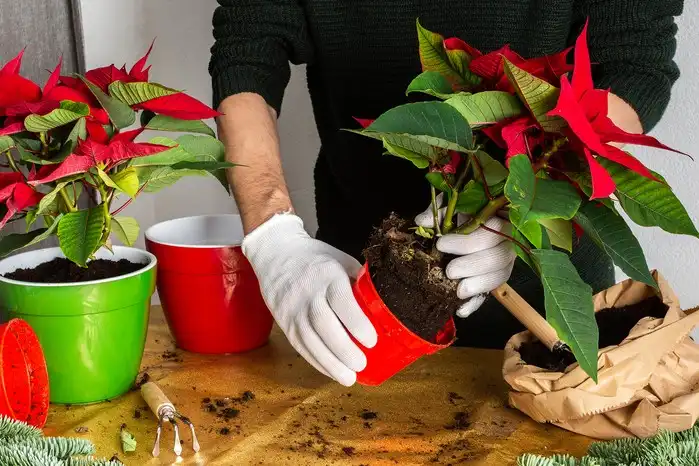
7. Repot Only in Spring (Not Winter)
Winter is a resting period for poinsettias, so avoid repotting during this time.
Best Time to Repot:
- April or May
- After trimming the plant back
Use well-draining soil and a pot only slightly larger than the current one.
Poinsettia Winter Care Troubleshooting Table
| Problem | Symptoms | Likely Causes | How to Fix It |
|---|---|---|---|
| Leaf Drop | Leaves falling suddenly, bare stems | Cold drafts, low light, sudden temperature changes | Move to a bright, draft-free place; maintain stable room temperature |
| Yellow Leaves | Leaves turn pale or yellow before dropping | Overwatering, soggy soil, poor drainage | Let soil dry, empty saucer, improve drainage, reduce watering frequency |
| Wilting | Limp leaves or drooping plant | Underwatering or exposure to heat sources | Water deeply, keep away from heaters, check soil moisture regularly |
| Brown Leaf Edges | Dry, crispy edges | Low humidity, heater exposure | Increase humidity, add a water tray, use a humidifier |
| Spots or Mold on Soil | White patches, fungus growth | Overwatering, poor airflow | Remove top soil layer, improve ventilation, let soil dry between watering |
| Dull or Fading Bracts | Red/pink bracts lose brightness | Insufficient light or too much heat | Move to bright indirect light, lower room temperature slightly |
| Drooping Bracts | Bracts bend downward | Dry air or inconsistent watering | Increase humidity, water when top soil dries |
| Leaf Curling | Leaves twist or curl inward | Low humidity or cold stress | Move away from drafts, boost humidity |
| Sticky Residue on Leaves | Shiny, sticky layer | Pest infestation (aphids/whiteflies) | Spray with neem oil or insecticidal soap |
| Weak Growth After Holidays | Slow or no new leaves | Lack of fertilizer during growth stage | Begin fertilizing lightly in late Feb–March |
Final Thoughts
Learning how to care for poinsettias during winter is the key to keeping this holiday plant healthy, colorful, and long-lasting. With the right light, proper watering, stable temperature, and a bit of attention, your poinsettia can stay beautiful well into spring, and even be kept alive for next year’s holiday season.
Poinsettias aren’t as fragile as they seem. Treat them with gentle warmth, bright light, and balanced watering, and they’ll reward you with festive blooms all winter long.