Is your oregano spindly and unproductive? The answer is not a chemical fertilizer or enchanted soil; the answer is harvest oregano the right way! By correctly and frequently harvesting your oregano, you will encourage your plant to become fuller and bushier, resulting in a high yield of fragrant leaves over an entire season.
In this beginner’s guide to oregano, I will discuss harvesting oregano including the very best time to do so, how to cut your oregano, how often to cut it, tools that can help you, and common errors that you may make while cutting your oregano. Let’s get started and encourage your oregano plant to grow branches abundantly!
Why Regular Harvesting Makes Oregano Grow Better
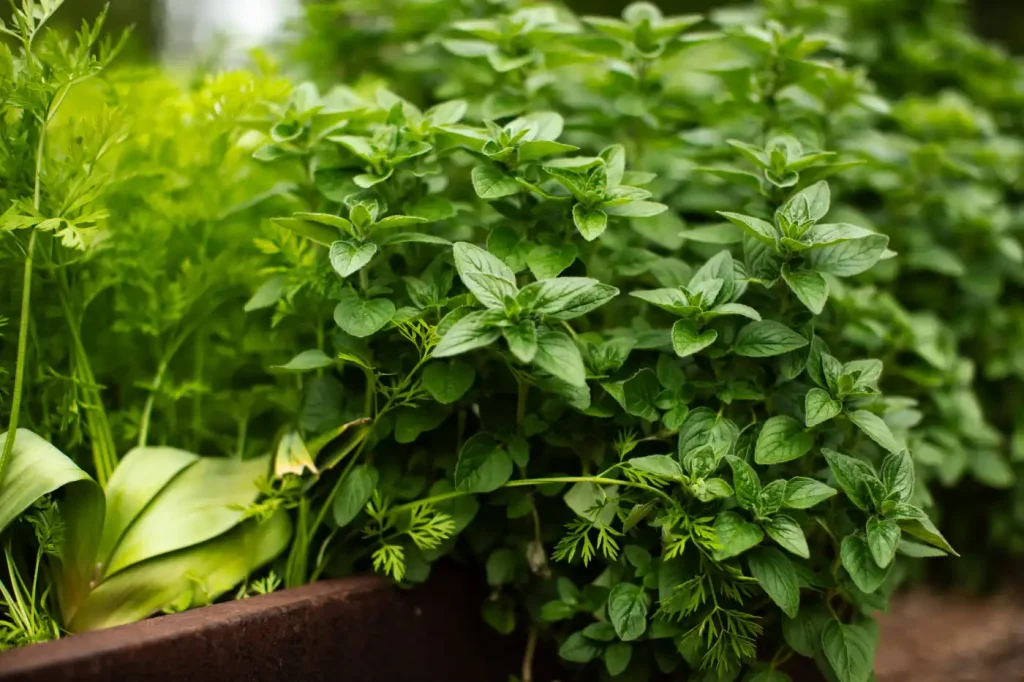
The hardy perennial herb oregano (Origanum vulgare) naturally wants to flower and set seed, but flowering frequently marks the end of peak leaf production, and flavor diminishes as energy is diverted to blooms.
Frequent harvesting is similar to “pruning” in the natural world:
- Eliminates apical dominance, or the tip that inhibits side shoot growth.
- Energy is redirected to lateral buds, resulting in bushier growth with more leaves and stems.
- Prolongs the tenderness and flavor of the leaves by delaying or stopping flowering.
- Promotes constant regrowth, resulting in several harvests from spring to autumn.
Regular snippers report healthier, denser plants with 2-3 times as much foliage. It’s the ultimate “cut-and-come-again” hack for herbs!
Step-by-Step: How to Harvest Oregano for Maximum Regrowth
To grow bushier plants and have larger yields, follow these steps.
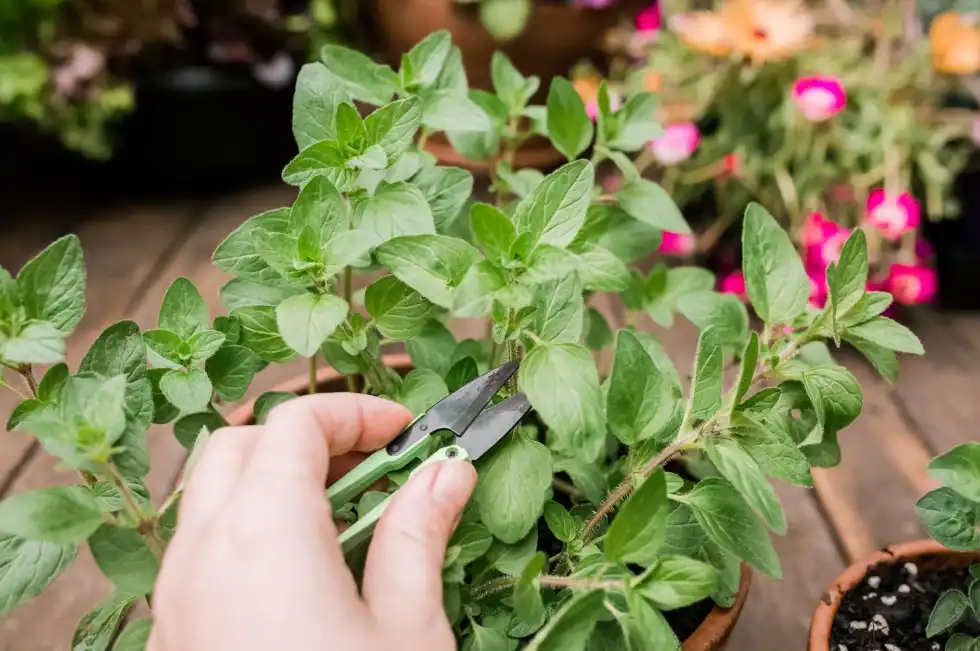
- Examine the plant – Pick a stem that is healthy with plump, green leaves. Avoid any stems that have woody bases or flowering ends if you can.
- Choose a cutting – Make your cut in the top third to the middle of the stem. If you want bushier growth then cut directly above each leaf node (leaf and stem junction); that is where new branches will develop.
- Make your cut – Use sharp, clean scissors or shears. Cut at a 45-degree angle up the stem, just above each leaf node, and remove anywhere from three to six inches from each stem.
- Shape the plant – Trim your plant evenly all around it so that it has a symmetrical appearance. Additionally, remove any stems that are too long, have crossed over another, or are dying.
- Clean up – If your cuttings are dusty, rinse them off gently. Gently shake each cutting to dry it.
- Aftercare – If the soil is dry, lightly water your newly cuttings. You should also fertilize them every four to six weeks with balanced, organic fertilizer. You should see new growth within seven to fourteen days!
Tip: The best way to get bushier plants is to give them an early to mid-season “haircut” after the first heavy harvest. By cutting back on the entire plant by one-third to one-half, you will cause the plant to send out a burst of new, tender shoots.
Tools You Need for Perfect Oregano Harvests
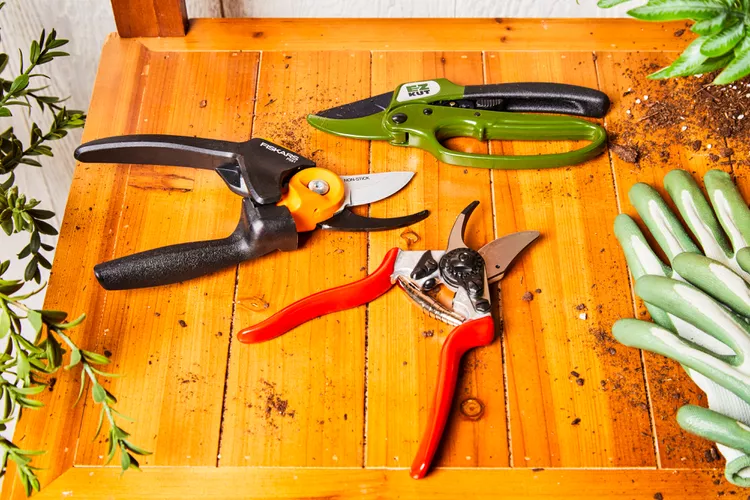
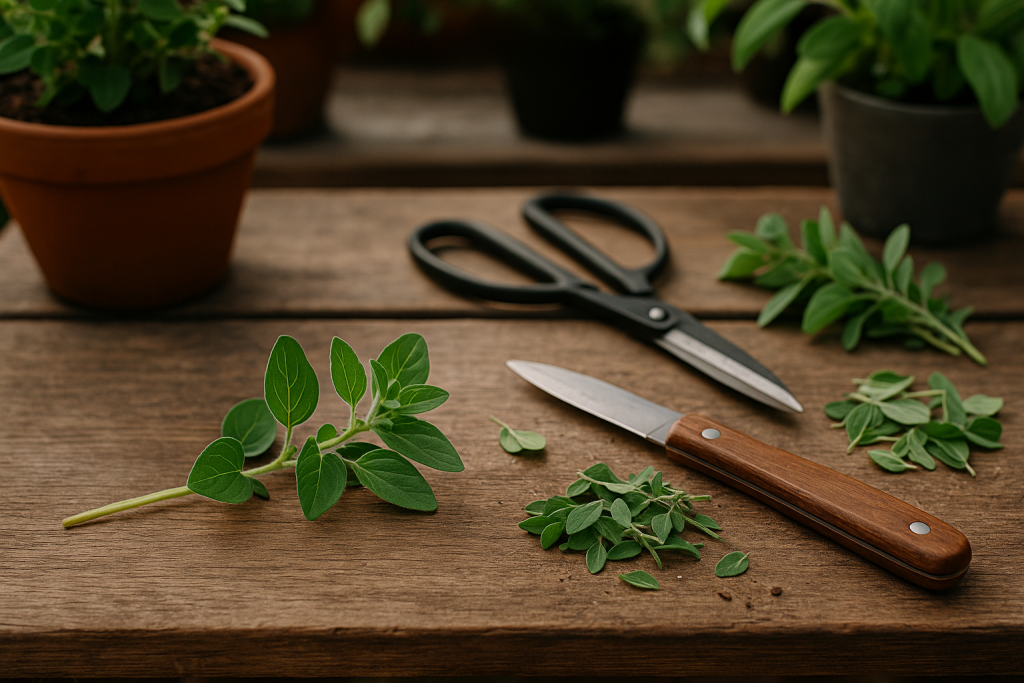
- Sharp herb scissors or micro-tip pruners (clean cuts prevent disease).
- Garden shears for larger plants.
- Gloves (optional – oregano can be irritating).
- Basket or bowl for collecting.
Sanitize tools with alcohol between cuts to avoid spreading issues.
How Often Should You Harvest Oregano?
- Young plants: Light pinch every 1–2 weeks once 6+ inches tall.
- Mature plants: Every 1–3 weeks in active season (spring/summer).
- Fall/winter: Reduce to occasional light trims or stop if dormant (in cold climates).
The “never more than ⅓ at once” rule keeps plants vigorous. Consistent light harvesting > infrequent heavy cuts.
Troubleshooting Common Harvesting Mistakes
Even simple snipping can go wrong. Use this table to diagnose and fix fast:
| Problem | Symptoms | Causes | Solutions |
|---|---|---|---|
| Leggy/Stretchy Growth | Tall, thin stems with few leaves | Infrequent harvesting, low light | Harvest more often; pinch tips regularly; ensure 6+ hours sun |
| Woody/Base-Heavy Plant | Thick woody stems at bottom, sparse tops | No pruning, allowing flowering/seed set | Hard prune in early spring or after flowering; cut back to 4–6 inches |
| Reduced Flavor After Harvest | Leaves taste weak/bitter | Harvesting too late (after flowering) | Cut just before buds form; harvest mid-morning; avoid over-mature stems |
| Slow Regrowth After Cutting | Little new growth after 2+ weeks | Cut too much (>⅓), drought, poor soil | Never remove >⅓; water consistently; side-dress with compost |
| Yellowing/Dying After Heavy Cut | Leaves yellow/drop, plant looks stressed | Over-harvesting, heat stress post-cut | Limit to ⅓ max; provide shade/temporary protection after big prune |
| Plant Stops Producing | No new leaves, flowering heavily | Allowed to flower/seed without interruption | Pinch off all buds/flowers; resume regular light harvesting |
| Pests/Disease After Pruning | Holes, spots, or wilting post-cut | Dirty tools, wet foliage after cut | Sanitize shears; prune in morning; improve airflow; neem if needed |
Monitor weekly – adjust frequency based on your plant’s response!
Get Harvesting & Watch Your Oregano Explode!
The quickest way to transform regular oregano into a lush, bushy machine that never stops giving is to harvest it regularly and wisely. Enjoy endless fresh flavor from your garden by taking frequent snippets, cutting above nodes, and never taking too much at once.
Grab your shears, head to your oregano patch, and start today. Your kitchen (and your plant) will thank you! What’s your favorite way to use fresh oregano? Drop a comment below – let’s swap tips!