Are you tired of boring grocery store strawberries? Imagine just standing up on your patio or balcony and picking delicious fresh strawberries from hanging pots – no bending, no weeding wars, and no slugs! For urban gardeners, small-space gardeners, or people living in apartments in the US, Great Britain, Canada, and other regions with similar climates, growing strawberries in hanging pots is one of the best ways to enjoy fresh berries all season long.
This guide to growing strawberries in hanging pots will cover everything – the best varieties of strawberries, setting up your pots, planting your strawberries, watering your strawberries, fertilizing your strawberries, cutting back your strawberries, harvesting your strawberries.
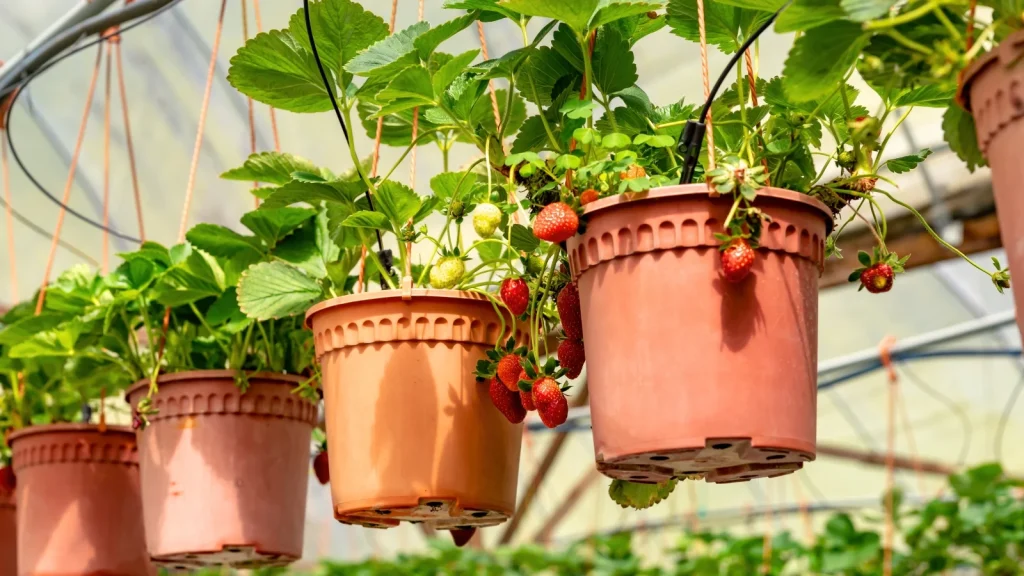
Best Strawberry Varieties for Hanging Pots and Baskets
Choose compact, trailing, or everbearing types that thrive in limited root space and produce continuously.
Top picks:
- Seascape – Day-neutral, high-yielding, sweet berries; compact and heat-tolerant – a favorite for containers.
- Tristar or Quinault – Everbearing, prolific, great flavor; ideal for hanging with runners that cascade beautifully.
- Albion – Large, sweet fruits; disease-resistant and reliable.
- Mara des Bois – Gourmet flavor like wild strawberries; compact and perfect for baskets.
- Ozark Beauty or Everest – Classic everbearing with good yields in pots.
- Alpine varieties – Tiny, fragrant berries; no runners, super compact for small baskets.
Avoid vigorous June-bearing types that produce heavy runners – they overwhelm pots. Opt for day-neutral or everbearing for multiple flushes.
Buy bare-root plants or plugs from nurseries in spring for best establishment.
Step-by-Step: How to Plant Strawberries in Hanging Pots
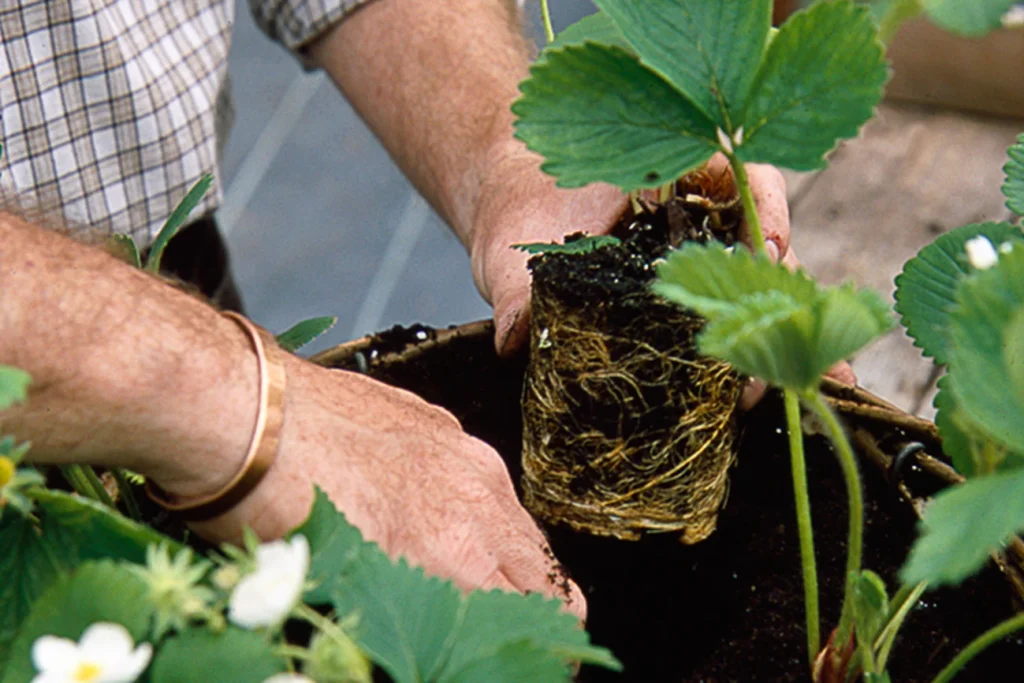
- Plant in the spring, following the last frost (April to May in many zones).
- Prepare the pot by filling it halfway with moist potting mix and, if necessary, lining the basket.
- Planting: Place crowns (where leaves meet roots) at soil level; too deep rots, too high dries out. Plants should be spaced three to six apart, depending on the size of the pot.
- Gently insert plants into the side holes of pocket pots.
- For a cascade effect, add trailing varieties around edges.
Fill and firm: Cover the roots with soil and give them a thorough watering to settle.
Initial care: To lessen transplant shock, spend the first few days partially shaded.
After planting, give it plenty of water.
Watering, Fertilizing, and Daily Care Tips
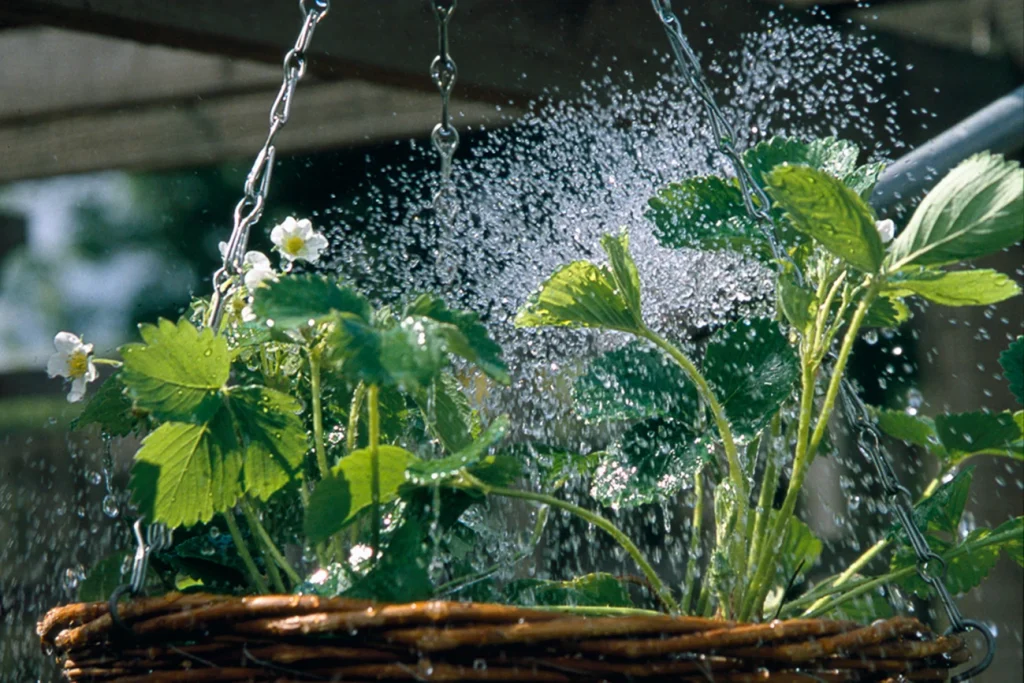
Watering: Hanging pots dry quickly, so it’s important to keep them consistently moist. Check every day; water when the top inch feels dry, which is frequently every day during the summer. Avoid soggy roots and strive for uniformly moist soil.
Fertilizing: Apply a balanced organic fertilizer (such as 10-10-10 or berry-specific) every two to three weeks. During fruiting, switch to high-potassium. Watering with liquid feeds can be very effective.
Mulching: To keep fruits clean and retain moisture, sprinkle them with pine needles or straw.
Pruning: To concentrate energy on fruit, remove runners (unless propagating). For stronger plants, pinch off the first year’s early flowers.
Support: If growth becomes lanky, pinch the tips and rotate the basket for even sunlight.
Harvesting Strawberries from Hanging Pots
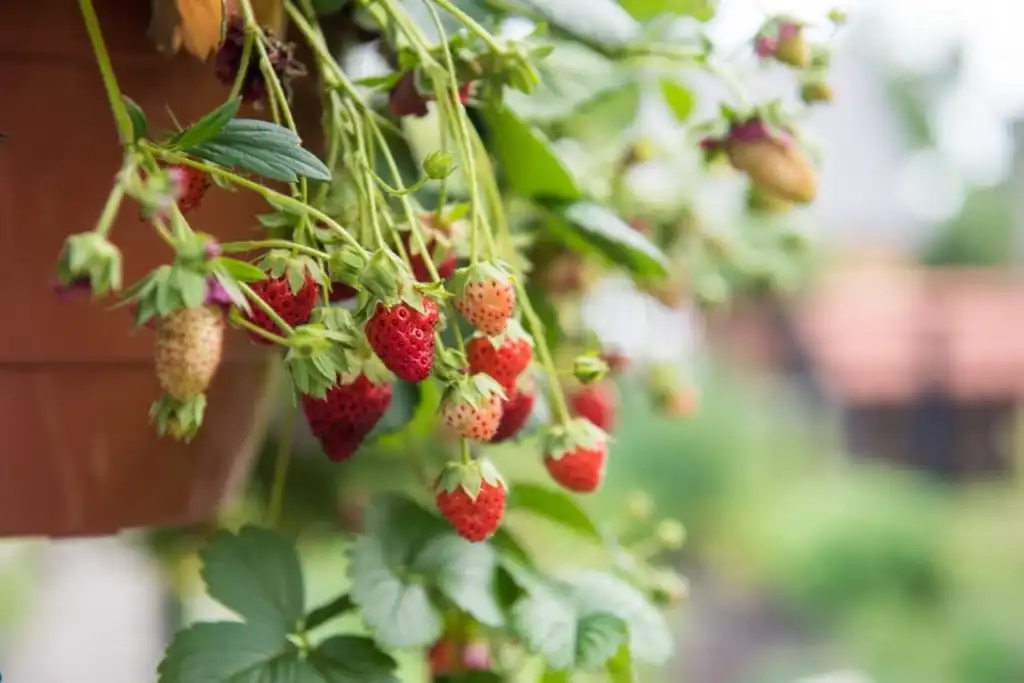
Pick when fully red and firm (every 2-3 days during peak). Twist gently or use scissors.
- Everbearing: Harvest June to frost.
- Yields: Expect 1-2 quarts per plant in good conditions.
Store in fridge; enjoy fresh, in smoothies, or on desserts!
Troubleshooting Common Problems with Hanging Strawberries
Hanging pots have unique challenges. Here’s a quick table for fast fixes:
| Problem | Symptoms | Causes | Solutions |
|---|---|---|---|
| Small or Few Berries | Tiny fruits, low yield | Overcrowding, low potassium, poor sun | Thin plants; use high-K fertilizer; ensure 6+ hours sun |
| Yellowing Leaves | Pale/yellow leaves, especially lower | Overwatering, nutrient lack, poor drainage | Improve drainage; reduce water; feed balanced fertilizer |
| Drying Out / Wilting | Droopy plants, dry soil | Pots dry too fast, infrequent watering | Water daily in heat; mulch heavily; use larger pots or self-watering |
| Fruit Rot / Mold | Berries gray/mushy | Wet fruits, poor airflow, overcrowding | Improve air circulation; avoid wetting berries; remove affected fruit |
| No Fruit / Flowers Drop | Blooms fall off | Heat stress, inconsistent water | Shade in extreme heat; consistent moisture; hand-pollinate if indoors |
| Pests (Aphids/Slugs) | Sticky leaves, holes, tiny bugs | Aphids, slugs (less in hanging) | Neem oil/soap spray; bird netting; inspect regularly |
| Leggy / Sparse Growth | Long stems, few leaves/fruits | Low light, excess nitrogen | Move to sunnier spot; reduce N fertilizer; pinch tips |
| Crown Rot | Brown/black at base, wilting | Crown buried too deep, overwatering | Plant crown at soil level; ensure good drainage |
| Birds Eating Berries | Half-eaten or missing fruits | Hungry birds | Use bird netting or reflective tape; harvest promptly |
Monitor weekly – early fixes keep your hanging garden thriving!
Start Growing Strawberries in Hanging Pots Today!
Strawberries are easy, economical, and incredibly tasty to grow in hanging pots. You can have cascading berries all season long if you choose the right types and provide them with consistent water and sunlight.
Your freshly picked strawberries are waiting for you, so grab a basket, plugs, and get hanging! Which hanging pot trick or strawberry variety is your favorite? Post your thoughts in the comments section below.
Cheers to sweet, homegrown success and happy gardening!