Garlic (Allium sativum), with its pungent flavor and health benefits, is a kitchen staple that’s surprisingly easy to grow at home. For example, cultivating your own garlic ensures a fresh, organic supply for cooking and medicinal uses. Moreover, it’s a low-maintenance crop that thrives in various climates, making it ideal for beginners and seasoned gardeners alike. This guide provides expert tips to grow garlic at home, helping you achieve vibrant, flavorful harvests in your garden or containers.
Why Grow Garlic at Home?
Garlic is prized for its culinary versatility, from enhancing dishes to serving as a natural remedy for colds. For instance, home-grown garlic often has a richer flavor than store-bought bulbs. Additionally, it’s packed with nutrients like allicin, which boosts immunity. Hardy in USDA zones 3–9, garlic is adaptable to many regions, and growing it saves money while adding a rewarding project to your garden. As a result, you’ll enjoy fresh, vibrant bulbs with minimal effort.
Types of Garlic to Grow
1. Softneck Garlic
- Description: Produces flexible stalks, multiple cloves per bulb, and stores well (6–12 months). Common varieties include ‘Silverskin’ and ‘Artichoke.’
- Best For: Warm climates (zones 7–9) and long-term storage.
- Benefit: Ideal for braiding due to its pliable stems.
2. Hardneck Garlic
- Description: Features a stiff central stalk, fewer but larger cloves, and produces edible scapes (flower stalks). Varieties include ‘Rocambole’ and ‘Porcelain.’
- Best For: Cooler climates (zones 3–6) and bold, complex flavors.
- Benefit: Scapes add a mild garlic flavor to dishes.
Step-by-Step Guide to Growing Garlic at Home
1. Choose Quality Garlic Bulbs
- Source: Purchase certified disease-free bulbs from a nursery or garden center. For example, avoid supermarket garlic, as it may be treated to prevent sprouting.
- Selection: Choose firm, plump bulbs with tight skins. Consequently, healthy bulbs ensure better germination and growth.
- Timing: Buy bulbs in late summer or early fall for fall planting, the optimal time for most regions.
2. Select the Ideal Location
- Light: Garlic thrives in full sun, requiring 6–8 hours of direct sunlight daily. For instance, a south-facing garden bed maximizes light exposure.
- Soil Type: Prefers well-draining, fertile soil with a pH of 6.0–7.0. Loamy or sandy loam soils are ideal for bulb development.
- Site Prep: Choose a spot with good air circulation to prevent fungal diseases. Additionally, avoid areas where water pools, as garlic dislikes soggy soil.
3. Prepare the Soil
- Loosen Soil: Dig to a depth of 8–12 inches to promote root and bulb growth. Remove rocks or debris for even development.
- Amend Soil: Mix in compost or well-rotted manure to boost fertility. For example, add 2–3 inches of compost and work it into the top 6 inches of soil.
- Drainage Test: Water the area; it should drain within a few hours. If not, amend with sand or use raised beds to prevent rot.
- Soil Testing: Use a soil test kit to check pH, adjusting with lime (to raise) or sulfur (to lower) if needed.
4. Planting Garlic Cloves
- Timing: Plant in fall (September–November) in zones 3–9 for a summer harvest. In milder climates (zones 7–9), early winter planting works. This allows roots to establish before winter dormancy.
- Method:
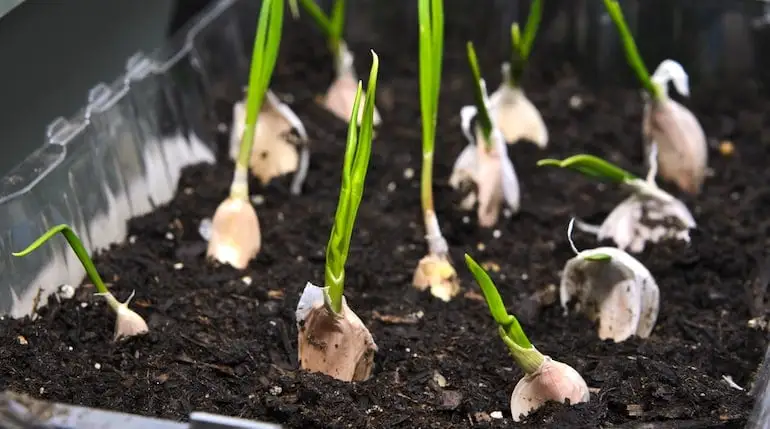
- Break bulbs into individual cloves, keeping the papery skin intact.
- Plant cloves pointed end up, 2 inches deep and 4–6 inches apart, in rows spaced 12 inches apart.
- Cover with soil and water lightly to settle.
- Mulching: Apply a 4–6 inch layer of straw or shredded leaves to insulate cloves, retain moisture, and suppress weeds. For instance, mulch protects cloves in colder zones during winter.
5. Care for Growing Garlic
- Watering: Water regularly during spring, providing 1 inch of water per week to keep soil moist but not soggy. Reduce watering in early summer as bulbs mature to prevent rot. For example, overwatering can split bulbs.
- Fertilizing: Apply a nitrogen-rich fertilizer (e.g., 10-5-5) in early spring when shoots emerge. Alternatively, use compost tea every 3–4 weeks. Stop fertilizing a month before harvest to focus energy on bulb development.
- Weeding: Keep beds weed-free, as weeds compete for nutrients. Hand-pull weeds or hoe carefully to avoid damaging shallow roots.
- Scape Removal (Hardneck): Cut off scapes when they curl to redirect energy to bulbs. For instance, use scapes in stir-fries or pestos for a mild garlic flavor.
- Pest and Disease Management: Monitor for pests like onion maggots or fungal issues like white rot. Consequently, use row covers for pests and ensure good drainage to prevent rot.
6. Growing Garlic in Containers
- Pot Selection: Use a container at least 8–12 inches deep and wide with drainage holes. For example, a 12-inch pot can hold 4–6 cloves.
- Soil Mix: Combine potting soil, compost, and perlite (2:1:1 ratio) for drainage and fertility.
- Care: Place in full sun, water when the top inch of soil is dry, and fertilize monthly. Move indoors or to a sheltered area in zones 3–6 during harsh winters.
- Spacing: Plant cloves 3–4 inches apart to allow bulb growth.
7. Harvesting and Storing Garlic
- Harvest Timing: Harvest in summer (June–July) when lower leaves turn brown but 4–5 green leaves remain. For example, this ensures bulbs are mature but not split.
- Method: Gently dig up bulbs with a garden fork, avoiding bruising. Shake off soil and let bulbs dry (cure) in a shaded, well-ventilated area for 2–4 weeks.
- Storage: Store cured bulbs in a cool (50–60°F), dry place with good air circulation. Softneck garlic lasts 6–12 months; hardneck lasts 3–6 months. Consequently, proper curing extends shelf life.
- Saving Cloves: Reserve the largest, healthiest cloves for replanting next season.
Common Challenges and Solutions
- Small Bulbs: Poor soil fertility or overcrowding. Therefore, enrich soil with compost and space cloves 4–6 inches apart.
- Yellowing Leaves: Overwatering, nutrient deficiency, or pests. For instance, reduce watering, apply fertilizer, and check for onion maggots.
- Fungal Diseases: White rot or rust from poor drainage or humidity. Thus, improve drainage, rotate crops, and avoid overhead watering.
- Bolting (Softneck): Stress from heat or drought. Consequently, mulch to regulate soil temperature and maintain consistent moisture.
Tips for Success
- Crop Rotation: Rotate garlic with non-allium crops (e.g., beans or lettuce) every 2–3 years to prevent soil-borne diseases.
- Companion Planting: Plant near roses or fruit trees to deter aphids. For example, garlic’s scent repels many pests.
- Zone Considerations: In zones 3–6, use hardneck varieties for cold tolerance. In contrast, zones 7–9 suit softneck varieties for milder winters.
- Mulch Benefits: Heavy mulch in fall protects cloves and reduces spring weeding, saving time.
- Flavor Boost: Hardneck varieties offer richer flavors for gourmet cooking, while softneck suits long-term storage.
Fun Facts About Garlic
- Medicinal Power: Garlic has been used for centuries to treat infections and boost immunity due to its allicin content.
- Cultural Symbol: In folklore, garlic wards off vampires and evil spirits, rooted in its strong aroma.
- Global Staple: Over 2.5 million acres of garlic are grown worldwide, with China leading production.
Troubleshooting Table
| Issue | Cause | Solution |
|---|---|---|
| Small bulbs | Poor soil or overcrowding | Enrich soil with compost, space cloves 4–6 inches apart. |
| Yellowing leaves | Overwatering or nutrient deficiency | Reduce watering, apply nitrogen-rich fertilizer, check for pests. |
| Fungal diseases | Poor drainage or high humidity | Improve drainage, rotate crops, avoid overhead watering. |
| Bolting (softneck) | Heat or drought stress | Mulch to regulate soil temperature, maintain consistent moisture. |
Conclusion
Growing garlic at home is a rewarding way to enjoy vibrant, flavorful harvests with minimal effort. By selecting quality bulbs, providing proper care, and addressing challenges promptly, you’ll cultivate robust garlic for your kitchen. For example, with the right timing and techniques, your garden will yield delicious bulbs year after year. Start planting garlic this fall, and savor the joy of home-grown, vibrant harvests!